
Hersteller kundenspezifischer SMT-Pipetten und Greifer
Kundenspezifische Pipetten und Greifer für die smarte EMS-Leiterplattenbestückung
Southern Machinery konstruiert und fertigt kundenspezifische SMT-Pipetten und Greiferpipetten für Odd-Form-Bauteile. JUKI, Yamaha, Fuji, Samsung, Panasonic. Senden Sie ein Bauteil für ein Angebot.
Ein Bestückautomat kann nur platzieren, was sein Werkzeug halten kann. Wir konstruieren, fertigen und testen die Pipette oder den Greifer, mit dem Ihre Linie die Odd-Form-Bauteile bestückt, die heute noch am Handarbeitsplatz landen.
Wichtigste Merkmale
Am Rand des Einsatzbereichs versagt das Vakuum
Ein Bauteil mit unebener Oberseite kann die Dichtung, die das Vakuum braucht, nicht bilden. Ein zu schweres Bauteil rutscht bei der Beschleunigung. Ein Bauteil mit empfindlicher Oberfläche wird von einer starren Spitze markiert. Diese drei Fehlerbilder erklären den Großteil der Odd-Form-Arbeit, die noch am Handarbeitsplatz liegt.
Das Werkzeug muss zum Bauteil passen, nicht zur Maschine
Ein Greifer wird um die Außenkontur einer Bauteilfamilie herum konstruiert. Deshalb bestückt derselbe Kopf einen 0402-Chip und braucht für einen 9,5-mm-Spulenkörper ein anderes Werkzeug. Selten ist die Maschine die Grenze – es ist die Schnittstelle zum Bauteil.
Die Kosten des Nichtlösens stehen nie in der Stückliste
Manuelle Odd-Form-Bestückung ist keine Position in der Kalkulation. Sie ist ein Bediener, ein Arbeitsplatz, ein Nacharbeitsschritt und eine Erstausbeute, die das Ziel nie ganz erreicht. Der Rechner unten ist so aufgebaut, dass Sie Ihre eigenen Zahlen eingeben können.
Spezifikationen
Werte wie in den Unterlagen von Southern Machinery veröffentlicht. Widersprechen sich zwei Quellen, werden beide Werte mit Quelle gezeigt.
| Gripper nozzle 2071, jaws closed | 8.5 · mm · CAD sheet · Verified material |
|---|---|
| Gripper nozzle 2071, jaws open | 18.5 · mm · CAD sheet · Verified material |
| Gripper arm width | 7 · mm · CAD sheet · Verified material |
| Gripper arm height | 7 · mm · CAD sheet · Verified material |
| Component size, gripper 2071 | 9.5 - 17.5 · mm · CAD sheet · Verified material |
| Gripping range, gripper nozzles | 0.8 - 5.2 · mm · Juki nozzle catalogue note · To be confirmed |
| Pickup rate | 99.99 · % · Nozzle sheet · Verified material |
| Custom build lead time | 1 · week · Nozzle sheet · To be confirmed |
| Custom build lead time | 2 - 4 · weeks · Design note · To be confirmed |
| Support window | 7 x 24 · hours · Nozzle sheet · Verified material |
| Standard nozzle body material | Copper alloy · - · Juki standard nozzle note · To be confirmed |
| Tool material for wear | Tungsten steel · - · Design note · Verified material |
| Tool material for static | Ceramic · - · Design note · Verified material |
| Tool material, wear and static | Diamond steel · - · Design note · Verified material |
| Soft tip material | Rubber or silicone · - · Design note · Verified material |
| Component sample wanted for a quote | 4 - 6 · inches of tape · Design note · Verified material |
| Vacuum, general placement | at least 400 · mmHg · Design note · Verified material |
| Vacuum, large components | at least 70 · mmHg · Design note · Verified material |
| Placement force, odd-form head | up to 100 · N · Industry reference · Verified material |
| Component weight, odd-form head | up to 300 · g · Industry reference · Verified material |
| Component footprint, odd-form head | up to 200 x 125 · mm · Industry reference · Verified material |
| Adaptive head, height levels | 1 - 25 · mm · Industry reference · Verified material |
| Placement accuracy, standard vacuum | within 0.02 · mm · Industry reference · Verified material |
| Nozzle service life | several · months · Design note · To be confirmed |
| Nozzle service life | more than 24 · months · Design note · To be confirmed |
| Dirt removed by a nozzle cleaning machine | 99 · % · Design note · Verified material |
Modelle, Vergleiche und offene Punkte
Where our own documents disagree, printed side by side (6 Zeilen)
| Parameter | Source A | Source B | Source C | Status |
|---|---|---|---|---|
| Custom build lead time | 1 week (nozzle sheet) | 2 - 4 weeks (design note) | about 1 month (custom solution sheet) | To be confirmed |
| Gripping range, gripper nozzle | 0.8 - 5.2 mm (Juki nozzle catalogue note) | 9.5 - 17.5 mm (2071 CAD sheet) | not stated | To be confirmed |
| Standard nozzle body material | copper alloy (Juki standard nozzle note) | tungsten steel, ceramic or diamond steel (design note) | not stated | To be confirmed |
| Custom nozzle part code | CN-SM-2713 (catalogue board) | Nozzle 2071 (CAD sheet) | JUKI-nozzle-customized (image library) | To be confirmed |
| Nozzle service life | several months (design note) | more than 24 months (same design note) | not stated | To be confirmed |
| Component sample wanted for a quote | 4 - 6 inches of tape (design note) | drawings accepted (catalogue entry) | not stated | To be confirmed |
Which tool handles which component family (8 Zeilen)
| Component family | Handling method | Published envelope | Note |
|---|---|---|---|
| Chip components, 0201 to 1206 | Vacuum nozzle | standard range | the default case, and the one standard nozzles are built for |
| MELF and cylindrical parts | V-groove nozzle | standard range | the groove keeps a round body from rolling on the tip |
| Electrolytic capacitors and bobbins | Gripper nozzle | 9.5 - 17.5 mm on the 2071 tool | the tool grips the body, not the top face |
| Terminals, pins and eyelets | Gripper or slot nozzle | not published | a slot enters between the parts of a connector block |
| Board-to-board and ribbon connectors | Slot nozzle | not published | narrow rectangular cross-section |
| Large ICs, sockets and shields | Pipe nozzle | not published | a wide suction area with an interchangeable rubber tip |
| Heavy or uneven parts | Friction gripper jaws | up to 300 g on an odd-form head | the jaw takes the load, so the vacuum seal is no longer critical |
| Parts needing axial force, such as pin-in-paste | Friction gripper jaws | up to 100 N on an odd-form head | the head applies the force; the tool holds the alignment |
Im Detail
A standard nozzle is built for the average part, and your problem is never the average part
Vacuum picks up flat, light, centred components. The parts that stop a line are none of those three things.
- Suction stops working at the edge of the envelope. A part with an uneven top face cannot form the seal suction needs. A part that is too heavy slips under acceleration. A part with a fragile face is marked by a rigid tip. Those three failures account for most of the odd-form work still sitting on a manual bench.
- The tool has to match the component, not the machine. A gripper is designed around the external profile of one part family. That is why the same head places a 0402 chip and then needs a different tool for a 9.5 mm bobbin. The machine is rarely the constraint; the interface to the part is.
- The cost of not solving it never appears on the BOM. Manual odd-form placement is not a line item. It is an operator, a bench, a rework step and a first-pass yield that never quite reaches the target. The calculator below is built so that you can put your own numbers into it.
From a component sample to a validated tool, in nine steps
Every step below produces something you can look at. Nothing is quoted from a written description alone.
- Receive the component. Send the part itself, ideally four to six inches of tape or a tube, or a drawing with the critical dimensions called out.
- Measure what matters. Outside profile, the face the tool has to bear on, mass, centre of gravity and any lead or pin pattern.
- Choose the handling method. Vacuum, friction jaws, a hybrid of the two, or a slot. The method follows the part, not the machine.
- Model the jaw. CAD geometry with the chamfers and radii that let the part enter the jaws without being pushed off centre.
- Check the structure. Thicker sections where the jaw sees the bending load during acceleration, so the head does not have to compensate for a flexible tool in software.
- Machine and fit. Body and jaw are cut to the interface your head expects, so the tool seats and repeats at the same height every cycle.
- Test on your component. Pick and place cycles on your own part, at production speed, with the pickup rate recorded and shipped with the tool.
- Validate the material. Tungsten steel, ceramic, diamond steel or a soft tip, chosen against wear, static and how fragile the component is.
Three families of custom tool, and the parts each one is built for
These three cover most of what an EMS quote asks for. The photograph library further down carries the rest.
- Custom gripper nozzles on a machined body. Three gripper nozzle bodies photographed on the bench, each showing the two-prong jaw that closes on the component.
- 500-series vacuum nozzles. Two 500-series nozzles: the green cap, the spring that keeps the tip compliant, and the machined aluminium body that seats in the head.
- JUKI gripper nozzle, 2071. The tool that supplies this page with its numbers: arm width and height 7 mm, jaws closed at 8.5 mm, open at 18.5 mm, for components from 9.5 mm to 17.5 mm.
Where our own documents disagree, printed side by side
These are the places where two sources we hold give different figures. We have not averaged them and we have not picked one. Ask us for the current drawing for your configuration before you order.
Which tool handles which component family
A quick map from the part in front of you to the tool that picks it. Where a figure is published it is printed; where it is not, the row says so.
What can be changed on a custom tool
Each of these is a decision you can make before the drawing is released.
- Handling method. Vacuum, friction jaws, hybrid suction plus jaws, or a slot, chosen from the shape of the part.
- Tip and jaw material. Tungsten steel, ceramic, diamond steel, or a rubber and silicone tip for delicate faces.
- Body length and interface. Cut to the interface your head expects, so it seats without an adapter.
- Coatings and surface finish. A coating to stop sticky or soft parts adhering to the tip.
- Error-proofing. Asymmetric keying on jaws that look alike, so a tool cannot be fitted the wrong way round.
- Marking and identification. The part code engraved on the body, so a tool on a bench can be identified without measuring it.
What happens after the tool lands
Six steps, and the first one is the only one that normally causes trouble.
- Fit and check the seating height. Seat the tool, then check the tip height against the head datum before running a cycle.
- Teach the pickup position. Set the pickup point in the machine's component data, then verify it with the head camera.
- Set the placement force. Start low for a fragile part and raise it until the placement repeats, not until it seats once.
- Run the pickup-rate test. Fifty cycles at production speed, with the misses counted, before the tool goes into the program.
- Write the inspection interval. Decide how often the tip is checked, and put it in the maintenance schedule rather than reacting to a fault.
- Keep the spare. A second tool on the shelf converts a tool failure from a line stop into a changeover.
What you get after the tool ships
Four things, and none of them are conditional on a service contract.
Videos
Clips aus dem YouTube-Kanal von Southern Machinery. Von YouTube wird erst etwas geladen, wenn Sie auf Abspielen drücken.
Kataloge und Dokumente
- PDFSouthern Machinery Customized Feeder Nozzle Catalog V03Custom nozzle and gripper catalogue
- PDFYamaha - Nozzle Catalogue -By SMThelpCustom nozzle and gripper catalogue
- PDFSMT Nozzle Supplier -Southern MachineryNozzle supplier sheet
- PDFSMT JUKI Serial Nozzle w 3D samples--Southern MachineryJUKI serial nozzle sheet
- PDFSMT JUKI Serial Nozzle--Southern MachineryJUKI serial nozzle sheet
- 3DJUKI Customized Nozzle CN-SM-2713Drawing library
- 3DSMT customized nozzle design n manufacturingDrawing library
- 3DSMT Gripper nozzle customizedDrawing library
- PDFSMT Gripper nozzle customized 3DDrawing library
- PDFSMT Gripper nozzle for E-cap 3DDrawing library
- PDFSMT JUKI Gripper Nozzle Terminal 0.8mm 3DDrawing library
- PDFJUKI Nozzle 505 3DDrawing library
- PDFSMT JUKI Vacuum nozzle CN2617-03 3DDrawing library
- 3DVideo board - every Southern Machinery clip
- 3DCatalogue board - every document
- LINKMachine catalogue - file.autoinsertion.com
Technische Notizen
ARTICLE 01The Odd-Form Part Your Mounter Refuses to Place Is a Tooling Problem, Not a Machine Problem
When a placement head rejects a component, the reflex is to blame the machine or the component. Almost always it is the interface between them, and that interface is a part you can order. Full articles are in English. The summary above carries the argument in your language. A mounter that refuses a component is not…
ARTICLE 02Why Your Best Operator Is Still Feeding Connectors by Hand
The bench exists because the parts on it are the ones nobody designed a tool for. That is a procurement gap, and it is closable. Full articles are in English. The summary above carries the argument in your language. Walk onto most EMS floors and there is a bench with connectors on it, and a person putting them on…
ARTICLE 03How to Tell Whether an Odd-Form Component Can Be Placed Automatically
Six questions about the part itself that predict, before anyone quotes anything, whether a tool can pick it reliably. Full articles are in English. The summary above carries the argument in your language. There is a version of this conversation that wastes months: a part goes back and forth between a factory and a…
ARTICLE 04Six Measurements to Take Before You Ask for a Custom Nozzle Quote
The measurements that decide the design, and the order to take them in. Arriving with these turns a two-week exchange into a single message. Full articles are in English. The summary above carries the argument in your language. The single most common reason a custom nozzle quote takes two weeks is that it is missing…
ARTICLE 05What a Nozzle Actually Costs Over a Year, Not at the Counter
The purchase price is the smallest number in the calculation. Wear, pickup rate, downtime and the labour behind the bench are the ones that move. Full articles are in English. The summary above carries the argument in your language. A nozzle is one of the cheapest things on a placement line and one of the few that…
ARTICLE 06Designing a Gripper Jaw Around a Component You Have Never Seen Before
What a drawing can and cannot tell a tool designer, and why a sample in the post is worth more than a dimensioned PDF. Full articles are in English. The summary above carries the argument in your language. A drawing tells a tool designer the shape of a part and almost nothing about how it behaves. The gap between…
Vollständige Artikel auf der interaktiven Produktseite lesen →
Häufige Fragen
Was benötigen Sie von mir für ein Angebot über eine kundenspezifische Pipette?
Das Bauteil selbst, idealerweise zehn bis fünfzehn Zentimeter Gurt oder eine Stange, oder eine Zeichnung mit bemaßter Außenkontur und der Fläche, auf der das Werkzeug aufsetzt. Fotos helfen, ersetzen aber keine Messung.
Für welche Maschinenmarken können Sie fertigen?
Unser Pipettenprogramm deckt Yamaha, Fuji, JUKI, Samsung, Panasonic, Hitachi, I-pulse, Siemens und ASM, Universal, Mirae, Sanyo und Sony ab. Steht Ihr Kopf nicht auf dieser Liste, senden Sie die Schnittstellenzeichnung – wir sagen Ihnen, ob wir ihn fertigen können.
Können Sie ein Bauteil bestücken, das für Vakuum zu schwer ist?
Ja, mit Reibbacken. Ein Odd-Form-Kopf dieser Klasse bringt bis zu 100 N Bestückkraft auf und trägt Bauteile bis 300 g. Die Backe nimmt die Last auf, und die Vakuumdichtung ist nicht mehr kritisch.
Wie lange dauert ein kundenspezifisches Werkzeug?
Unsere eigenen Unterlagen widersprechen sich: Das Pipettenblatt nennt eine Woche, die Konstruktionsnotiz zwei bis vier Wochen und etwa einen Monat für eine vollständig kundenspezifische Lösung. Planen Sie mit zwei bis vier Wochen und lassen Sie sich den Termin anhand der Zeichnung Ihres Bauteils bestätigen.
Aus welchem Material sollte das Werkzeug bestehen?
Wolframstahl für Verschleißfestigkeit, Keramik für elektrostatisch empfindliche Bauteile, Diamantstahl, wenn Sie beides brauchen und die Kosten akzeptieren, und eine Gummi- oder Silikonspitze, wenn die Bauteiloberfläche leicht markiert wird. Keramik ist bruchempfindlich – planen Sie bei dieser Wahl Ersatzteile ein.
Erlischt durch ein kundenspezifisches Werkzeug meine Maschinengarantie?
Das hängt von Ihrem Maschinenlieferanten ab, nicht von uns, und wir werden nicht raten. Die Werkzeuge werden auf die Standardschnittstelle Ihres Kopfes gefertigt und erfordern keine Maschinenänderung – üblicherweise die Bedingung –, aber klären Sie es mit Ihrem Lieferanten.
Woher weiß ich vor dem Versand, dass das Werkzeug funktioniert?
Es wird mit Ihrem eigenen Bauteil bei Produktionsgeschwindigkeit getestet, und die Aufnahmequote aus diesem Test wird mit dem Werkzeug geliefert. Sie nehmen kein ungetestetes Teil ab.
Kann ich dasselbe Werkzeug später nachbestellen?
Ja, auf Basis der von Ihnen freigegebenen Zeichnung, sodass sich ein zweites Werkzeug wie das erste verhält. Lassen Sie die Zeichnungsnummer in Ihrer Bestellung angeben.
Ähnliche Produkte
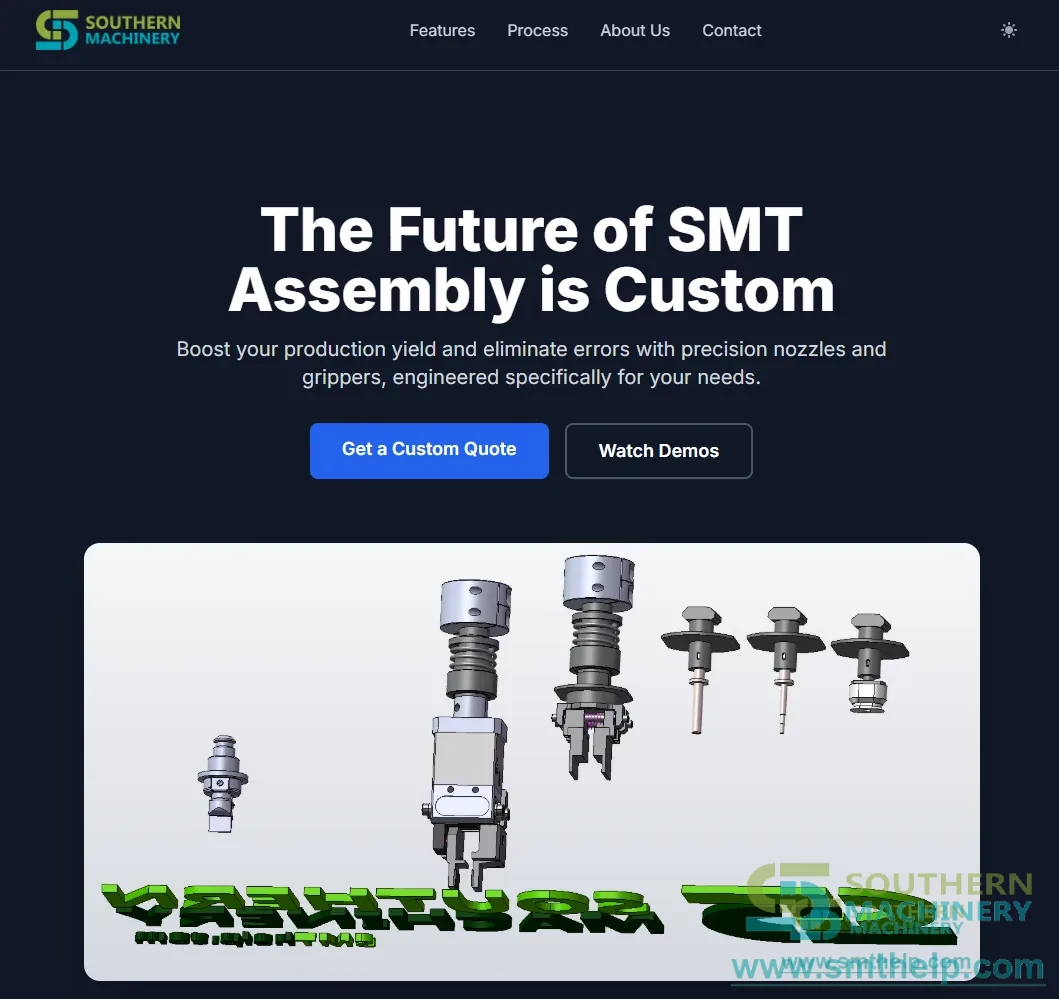
JUKI SMT-Bestückpipetten – Hersteller für die smarte EMS-Leiterplattenbestückung
Vakuum-, Schlitz-, Greifer- und Rohrpipetten für JUKI-Bestücker KE-2010 bis KE-2060, FX-1 und die 700er-Serie. Spitzenbohrungen von 0,4 mm bis 9,5 mm, Körper aus Kupferlegierung, kundenspezifische Konstruktion, eine Woche Lieferzeit.
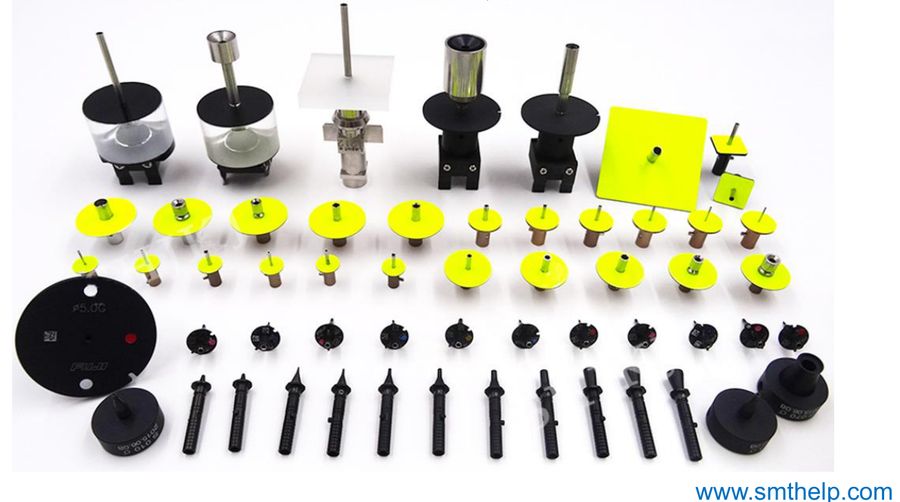
Hersteller von FUJI-SMT-Pipetten
Southern Machinery konstruiert und fertigt FUJI-kompatible SMT-Bestückpipetten – NXT H01/H04/H04S/H08/H12/H08M/H24, CP/QP/IP und kundenspezifische LED-Spitzen von ø0,3 bis ø15 mm, aus Keramik, Metall und mit Gummipad, mit OEM-Data-Matrix- und Farbmatrix-Codes. Maßhaltiger Drop-in-Ersatz, ein Tag Ersatzteil-Lieferzeit, fünf Tage für kundenspezifische Konstruktion. Fordern Sie eine Pipettenzuordnung an.

Konstruktion und Fertigung von SMT-Pipetten und Greifern für die smarte EMS-Leiterplattenbestückung
Southern Machinery konstruiert und fertigt kundenspezifische SMT-Pipetten und Greiferpipetten für die smarte EMS-Leiterplattenbestückung. 99,99 % Aufnahmequote, Spitzen aus Diamantstahl und Keramik, Plug & Play für JUKI, Yamaha, FUJI, Panasonic. Lieferung in 2–4 Wochen, über 50 Länder.
SMT-Bestückpipetten-Serie – Hersteller für die smarte EMS-Leiterplattenbestückung
Bestückpipetten für Bestücker von JUKI, Yamaha, Siemens/ASM, FUJI, Panasonic und Samsung/Hanwha: Vakuum-, Schlitz-, Greifer- und Rohrpipetten, Standard und kundenspezifisch, abgestimmt auf Ihren Kopf. Ein Lieferant für das ganze Pipettenregal.
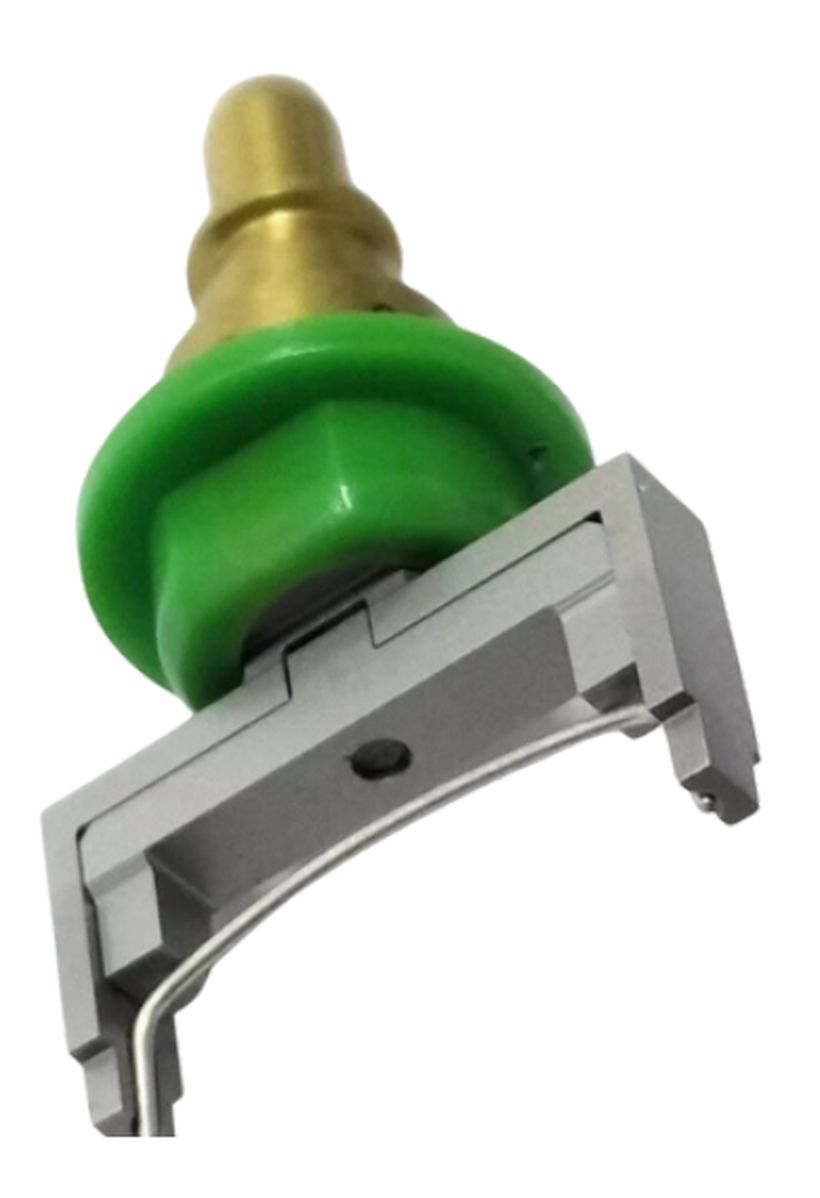
Hersteller von Panasonic-SMT-Pipetten
Southern Machinery konstruiert und fertigt Panasonic-kompatible SMT-Bestückpipetten für NPM- (D3/W/TT2/VF) und CM-Bestücker (402/602/603) – Vakuum-, Greifer-, Kalibrier- und kundenspezifische Odd-Form-Spitzen von 0402 bis Φ10 mm, aus Keramik, Metall und Gummi. N6100xxxxx-Teilenummern reproduziert, maßhaltiger Drop-in-Ersatz, ein Tag Ersatzteil-Lieferzeit, fünf Tage für kundenspezifische Konstruktion. Fordern Sie eine Pipettenzuordnung an.

Hersteller von Siemens-SMT-Pipetten für die smarte EMS-Leiterplattenbestückung
Bestückpipetten für Siemens und ASM SIPLACE, abgestimmt auf Ihren 12-Segment-Stern-Kopf, den C&P20A-Stern oder CPP-Segmente. 128 dokumentierte 7xx/9xx-Datenblätter, Keramik- und kundenspezifische Spitzen, vakuumgeprüft. Identifizieren, prüfen, nachbauen.
Einige technische Angaben auf dieser Seite (Tabellen, Dokumenttitel) erscheinen wie veröffentlicht auf Englisch.
Angebot anfordern: Hersteller kundenspezifischer SMT-Pipetten und Greifer
Senden Sie Ihre Platine, Bauteilliste oder Ihr Maschinenmodell, und wir antworten mit einer Konfiguration und einem Angebot. Preise werden projektbezogen kalkuliert.