
JUKI SMT-Bestückpipetten – Hersteller für die smarte EMS-Leiterplattenbestückung
JUKI SMT-Bestückpipetten für die smarte EMS-Leiterplattenbestückung
Vakuum-, Schlitz-, Greifer- und Rohrpipetten für JUKI-Bestücker KE-2010 bis KE-2060, FX-1 und die 700er-Serie. Spitzenbohrungen von 0,4 mm bis 9,5 mm, Körper aus Kupferlegierung, kundenspezifische Konstruktion, eine Woche Lieferzeit.
Die Pipette ist der letzte Millimeter zwischen Ihrem Bestücker und der Platine. Southern Machinery konstruiert und fertigt Bestückpipetten für JUKI-Bestücker – Standardserien 500 und 700 sowie Schlitz-, Greifer- und Rohrpipetten für Odd-Form-Bauteile –, abgestimmt auf das Bauteil, das Sie tatsächlich bestücken.
Wichtigste Merkmale
Die richtige Bohrung – sonst verkantet das Bauteil
Jede Standard-JUKI-Pipette ist für eine bestimmte Bauteilbreite ausgewiesen. Eine zu breite Spitze verliert an einem kleinen Chip die Vakuumdichtung; eine zu schmale kann ein großes Gehäuse nicht sicher halten. Die Bohrung passend zum Bauteil zu wählen, ist die wichtigste Voraussetzung für eine saubere Aufnahme.
Verschleiß ist ein Stillstandsposten, kein Verbrauchsposten
Eine verschlissene Spitze erhöht die Fehlaufnahmequote lange bevor jemand sie als Störung erfasst. Der Bestücker wiederholt, der Kopf wartet, und der Bediener beseitigt eine Störung, die der Katalog vorhergesagt hätte. Die Pipettenstandzeit ist eine Durchsatzkennzahl mit Ersatzteil-Etikett.
Odd-Form-Bauteile brauchen ein anderes Werkzeug, keinen kleineren Chip
Steckverbinder, Transformatoren und gepolte Bauteile sitzen nicht auf einer flachen Vakuumspitze. Schlitz-, Greifer- und Rohrpipetten gibt es genau für diese Teile, und die Wahl des Typs ist eine Konstruktionsentscheidung vor dem Linienstart, keine Notlösung nach dem Stillstand.
Spezifikationen
Werte wie in den Unterlagen von Southern Machinery veröffentlicht. Widersprechen sich zwei Quellen, werden beide Werte mit Quelle gezeigt.
| 101 (700 laser) | 1.0 mm · 0.4 mm · under 1.1 mm |
|---|---|
| 102 (700 laser) | 1.5 mm · 1.0 mm · 1.1 to 2.5 mm |
| 103 (700 laser) | 3.0 mm · 1.7 mm · 2.5 to 4.0 mm |
| 104 (700 laser) | 4.0 mm · 3.2 mm · 4.0 to 7.0 mm |
| 105 (700 laser) | 6.5 mm · 5.0 mm · 7.0 to 10.0 mm |
| 106 (700 laser) | 9.5 mm · 8.0 mm · 10.0 mm and up |
| 201 (700 vision) | 1.0 mm · 0.4 mm · Not stated |
| 202 (700 vision) | 1.5 mm · 1.0 mm · Not stated |
| 203 (700 vision) | 4.0 mm · 3.2 mm · Not stated |
| 204 (700 vision) | 6.5 mm · 5.0 mm · Not stated |
| 500 (2000) | 1.0 x 0.5 mm · 2.0 x 0.4 mm · 0402 / 0603 class |
| 501 (2000) | 0.7 x 0.4 mm · 2.0 x 0.2 mm · under 0.45 mm |
| 502 (2000) | 0.7 mm · 0.4 mm · 0.45 to 0.75 mm |
| 503 (2000) | 1.0 mm · 0.6 mm · 0.75 to 1.45 mm |
| 504 (2000) | 1.5 mm · 1.0 mm · 1.1 to 2.5 mm |
| 505 (2000) | 3.5 mm · 1.7 mm · 2.5 to 4.0 mm |
| 506 (2000) | 5.0 mm · 3.2 mm · 4.0 to 7.0 mm |
| 507 (2000) | 8.5 mm · 5.0 mm · 7.0 to 10.0 mm |
| 508 (2000) | 9.5 mm · 8.0 mm · 10.0 mm and up |
| 510 (2000) | 1.5 mm · 0.6 mm · 1.6 to 3.5 mm |
| 511 (2000) | 2.0 mm · 1.2 mm · up to 5.9 mm |
| Gripper 800-803 | grip 0.8-5.2 mm · arm 2.8-5.8 mm · bulky / polarised parts |
Modelle, Vergleiche und offene Punkte
Where the documents disagree, both values stay on the page (6 Zeilen)
| Point | JUKI catalogue (Rev C) | Southern Machinery deck | What the difference means | Status |
|---|---|---|---|---|
| 504 outer bore | Rev C prints 1.5 mm outer for nozzle 504. | Some Southern Machinery reference tables list 1.6 mm for the same tip. | A 0.1 mm difference changes the seal on a small body; confirm the tip you are quoting. | To be confirmed |
| 500-series part numbers | Two revisions exist: E36xx7290A0 (original) and 40011046 / 40001339... (new). | The deck lists nozzle numbers, not the OEM part revision. | The new revision is compatible with KE-2050 / 2060 / FX-1 but not the earlier KE-2010 to 2040. | To be confirmed |
| Pickup rate wording | Not stated as a rate in the catalogue. | The deck claims a 99.99 percent pickup rate (printed once as 'adsonrption', a typo). | A Southern Machinery marketing claim, not a catalogue figure; treat as a target, not a guarantee. | To be confirmed |
| Service life | No life figure in the catalogue. | The deck states 'service life of more than 24 months' and 'longer life-time'. | Life depends on duty cycle, part abrasion and cleaning, so it is not a fixed number. | To be confirmed |
| Materials | Catalogue: copper-alloy body and tip; polyurethane cups on fine-pitch tips; rubber tips on pipe nozzles. | Supplier catalogue tags JUKI rows as METAL / PAD without naming an alloy. | No tungsten-carbide or ceramic claim is made for these JUKI rows in any supplied document. | To be confirmed |
| RES-1 / 7501-7508 series | The Rev C catalogue does not carry a RES-1 numbering. | The Southern Machinery deck lists a RES-1 serial nozzle family, types 7501 to 7508. | A Southern Machinery family label; confirm the machine mapping against your head. | To be confirmed |
Which nozzle family fits which JUKI mounter (3 Zeilen)
| JUKI machine series | Nozzle type family | 500-series part number | Fit note |
|---|---|---|---|
| KE-2010 / 2020 / 2030 / 2040 | 500 series (501-508) | E36xx7290A0 (original) | Takes the original 500-series revision; the new part number is not compatible. |
| KE-2050 / 2060 / FX-1 | 500 series (501-508) | E36xx7290A0 or 40011046 (new) | Takes both the original and the new 500-series revision. |
| 700 series (730 / 740 / 750 / 760) | 1xx laser / 2xx vision | not stated | 101 to 106 on laser heads, 201 to 204 on vision heads. |
Im Detail
A pick error is a nozzle decision, not a machine decision
Two boards from the same feeder, the same program, the same head - and one skips 0402s while the other runs clean. The variable is almost always the tip: the wrong bore for the component width, a worn edge, or a nozzle that was never meant for the part. Getting the nozzle right is cheaper than buying a new machine.
- The right bore, or the part skews. Every standard JUKI nozzle is published against an applicable component width. A tip too wide loses the vacuum seal on a small chip; a tip too narrow cannot seat a large body. Matching the bore to the part is the first cause of a clean pick.
- Wear is a downtime line, not a consumable line. A worn tip raises the mis-pick rate long before anyone logs it as a fault. The mounter retries, the head waits, and the operator clears a jam that the catalogue would have predicted. Nozzle life is a throughput number wearing a spare-parts label.
- Odd-form parts need a different tool, not a smaller chip. Connectors, transformers and polarised parts do not sit on a flat vacuum tip. Slot, gripper and pipe nozzles exist for exactly these parts, and choosing the type is a design decision made before the line runs, not a fix applied after it stops.
From component drawing to a nozzle that runs
Selecting a pickup nozzle is a short, repeatable sequence: measure the part, pick the tip family, size the bore to the component width, then confirm the shaft, the material and the pick test. Southern Machinery runs this sequence against your actual component, not a catalogue photograph.
- Measure the component. Record the body width, length, height and weight. The width drives the bore; the weight drives the vacuum.
- Pick the tip family. Flat chips take a vacuum tip. Leads and slots take a slot nozzle; bulky or polarised parts take a gripper or a pipe nozzle.
- Size the bore to the width. The catalogue maps each standard nozzle to an applicable component width, so the bore is chosen from a published band, not by eye.
- Match the shaft and slider. The nozzle must seat on the correct JUKI head and, where used, the standard Automatic Tool Changer shaft.
- Choose material and tip. Standard bodies are a copper alloy; fine-pitch tips use polyurethane cups; pipe nozzles use interchangeable rubber tips.
- Machine the tip geometry. Outer and inner diameter, chamfer and slot width are cut to the drawing so the seal forms on the first pick.
- Test the pick rate. The nozzle is proven on the part before it ships; Southern Machinery quotes a 99.99 percent pickup rate on its own decks.
- Install and teach. Fit to the head, set the pickup height and vacuum, then confirm the pick window on the machine.
Three nozzle families cover the JUKI mounter range
The JUKI application catalogue groups its standard nozzles by head and machine series. Southern Machinery manufactures to those groups and to the special families the same catalogue lists.
- 500 series - 2000 / FX-1 heads. The 501 to 508 tips serve the KE-2010, 2020, 2030, 2040, 2050, 2060 and FX-1 vision and laser heads, with a bore from 0.7 mm to 9.5 mm. Two part-number revisions exist; see Open points.
- 1xx and 2xx - 700 series heads. On the 700 series, 101 to 106 run the laser-alignment heads and 201 to 204 the vision-alignment heads, sized from 1.0 mm to 9.5 mm outer bore.
- Slot, gripper and pipe - odd-form. Slot nozzles grip leads, gripper nozzles handle bulky or polarised parts across a 0.8 to 5.2 mm gripping range, and pipe nozzles carry large bodies and sockets, each listed for the 700 and 2000 families.
Where the documents disagree, both values stay on the page
A nozzle table that quietly picks one of two numbers is worth less than one that shows both. Six points below are stated differently across the supplied documents, or are named in only one of them. Confirm each against the current drawing for your head and configuration before you place an order.
Which nozzle family fits which JUKI mounter
The JUKI application catalogue maps machine series to nozzle type. The table summarises that mapping and the two 500-series part-number revisions so you can check fit before you specify.
What you choose when you order a nozzle
Each of these is a documented family in the catalogue or the Southern Machinery decks, not a custom engineering project.
- Standard vacuum tips. The 500, 1xx and 2xx families for flat chips, MELF, tantalum, SO, QFP and BGA, sized by component width.
- Slot nozzles. For leaded and connector parts; slot width and length are published per type across the 700 and 2000 families.
- Gripper nozzles. Mechanically clamp bulky or polarised parts across a 0.8 to 5.2 mm gripping range instead of relying on vacuum alone.
- Pipe nozzles. For large bodies, sockets and shields, with interchangeable rubber tips to protect the part.
- Automatic Tool Changer fit. Custom nozzles are built to the standard nozzle slider shaft and the standard Automatic Tool Changer.
- Custom design. Southern Machinery designs and manufactures to your drawing when a standard tip does not suit the component.
Six steps from nozzle in hand to first clean pick
A nozzle only performs when it is seated, bored and taught correctly. These are the six steps Southern Machinery uses when a nozzle goes onto a head.
- Confirm the family. Check the nozzle type against your head series - 500 for 2000 / FX-1, 1xx / 2xx for the 700 series.
- Check the part revision. On the 500 series, confirm whether your machine takes the original or the new part number before fitting.
- Seat on the shaft. Mount on the correct slider and, where used, the Automatic Tool Changer; confirm the nozzle runs true.
- Set the bore to the part. Match the tip bore to the component width band so the vacuum seal forms on the first pick.
- Teach pickup height and vacuum. Set the pickup height, dwell and vacuum level on the machine, then verify the pick window.
- Prove and log. Run the part, record the mis-pick rate, and set a replacement trend before wear becomes a stop.
What happens after the nozzles land
Southern Machinery designs and manufactures in Shenzhen and supports the parts it ships.
Videos
Clips aus dem YouTube-Kanal von Southern Machinery. Von YouTube wird erst etwas geladen, wenn Sie auf Abspielen drücken.
Kataloge und Dokumente
- PDFJuki - Nozzle Catalogue-Rev-C3JUKI Nozzle Application Catalogue (Rev C)
- PDFSMT JUKI Serial Nozzle--Southern MachinerySMT JUKI Serial Nozzle - Southern Machinery
- PDFSMT Nozzle Supplier -Southern MachinerySMT Nozzle Supplier - Southern Machinery
- PDFSouthern Machinery Customized Feeder Nozzle Catalog V03Customized Feeder and Nozzle Catalogue
- PDFSMT JUKI Serial Nozzle w 3D samples--Southern MachineryCustomized Feeder and Nozzle Catalogue
- PDFJUKI Nozzle 505 3DCustomized Feeder and Nozzle Catalogue
- 3DYouTube video board - every Southern Machinery machine video
- 3DProduct catalog board - every document in one place
- LINKMachine catalogue - file.autoinsertion.com
Technische Notizen
ARTICLE 01Your Mis-pick Rate Is a Nozzle Problem Before It Is a Machine Problem
Before you call the machine vendor, look at the tip in the head. Full articles are in English. The summary above carries the argument in your language. A line is throwing one 0402 in three hundred. The program is clean, the feeder is new, the head has been serviced, and the machine vendor is about to be asked for a…
ARTICLE 02How to Read a Nozzle Bore Table Without Guessing
Outer bore, inner bore and applicable width do three different jobs. Full articles are in English. The summary above carries the argument in your language. A nozzle table has three columns that look like they say the same thing and do not: outer bore, inner bore, and applicable component width. Reading them correctly…
ARTICLE 03When to Stop Using a Vacuum Tip and Start Using a Gripper
Three signs the part is telling you it needs a mechanical grip. Full articles are in English. The summary above carries the argument in your language. Vacuum is the default, and for flat chips it is the right answer. But there is a moment on every odd-form line when the vacuum tip stops being the tool and starts…
ARTICLE 04The Two 500-Series Revisions and Why Backward Fit Is Not Assumed
Same nozzle number, different part number, different machine. Full articles are in English. The summary above carries the argument in your language. The same nozzle number can be two different parts. On the JUKI 500 series that distinction decides whether the nozzle fits your machine at all, and it is the single most…
ARTICLE 05Nozzle Wear Is a Throughput Number Wearing a Spare-Parts Label
What a rising mis-pick trend costs you before anyone logs a fault. Full articles are in English. The summary above carries the argument in your language. Nobody budgets for nozzle wear, because it never fails as an event. It fails as a trend - a mis-pick rate that climbs by a fraction of a percent a week until one…
ARTICLE 06Selecting a Nozzle for Odd-Form Parts: Slot, Gripper or Pipe
A short decision order that keeps the wrong tool off the head. Full articles are in English. The summary above carries the argument in your language. Odd-form nozzle selection looks like guesswork until you realise it is a fixed order of questions. Answer them in sequence and the right tip - slot, gripper or pipe -…
Vollständige Artikel auf der interaktiven Produktseite lesen →
Häufige Fragen
Auf welche JUKI-Maschinen passen diese Pipetten?
Der JUKI-Anwendungskatalog ordnet die 500er-Serie den Köpfen KE-2010, 2020, 2030, 2040, 2050, 2060 und FX-1 zu, die Familien 1xx und 2xx der 700er-Serie. Southern Machinery führt außerdem eine RES-1-Serienfamilie. Bestätigen Sie vor der Bestellung Ihren genauen Kopf und die Firmware.
Welche Spitzengrößen sind verfügbar?
Die Außenbohrungen der Standardspitzen reichen von 0,7 mm (Pipette 501/502) bis 9,5 mm (508 und 106), die Innenbohrungen von 0,2 mm bis 8,0 mm. Jede Katalogpipette ist für eine Bauteilbreite ausgewiesen, die Bohrung wird also aus einem Bereich gewählt und nicht nach Augenmaß.
Woraus bestehen die Pipetten?
Der Katalog nennt Körper und Spitze aus Kupferlegierung, mit Polyurethan-Saugern an Fine-Pitch-Spitzen und austauschbaren Gummispitzen an Rohrpipetten. Für diese JUKI-Positionen wird in den gelieferten Unterlagen weder Hartmetall noch Keramik angegeben; der Lieferantenkatalog von Southern Machinery kennzeichnet die JUKI-Positionen als METAL / PAD.
Können Sie eine kundenspezifische Pipette fertigen?
Ja. Southern Machinery bezeichnet sich als spezialisiert auf Konstruktion und Fertigung von SMT-Pipetten und führt eine Familie kundenspezifischer Pipetten, darunter Schlitz-, Greifer- und Rohrtypen sowie ein kundenspezifisches JUKI-Teil CN-SM-2713. Kundenspezifische Pipetten werden für die Standard-Schieberwelle und den Standard-Werkzeugwechsler gebaut.
Ist die Teilenummer der 500er-Serie mit meiner älteren Maschine austauschbar?
Nicht immer. Der Katalog führt zwei Revisionen: die ursprüngliche E36xx7290A0 und die neue Serie 40011046 / 40001339. Die neue Revision ist kompatibel mit KE-2050, KE-2060 und FX-1, nicht aber mit den früheren KE-2010 bis 2040. Prüfen Sie die Revision vor dem Einbau anhand Ihres Modells.
Welche Aufnahmequote und Standzeit kann ich erwarten?
Die Präsentationen von Southern Machinery nennen eine Aufnahmequote von 99,99 Prozent und eine Standzeit von über 24 Monaten. Das sind Herstellerangaben, keine Katalogwerte; die reale Standzeit hängt von Einschaltdauer, Abrieb der Bauteile und Reinigungshäufigkeit ab. Betrachten Sie sie als Zielwerte und prüfen Sie sie an Ihrem Bauteil.
Welche Bauteile brauchen eine Greifer- oder Schlitzpipette statt einer Vakuumspitze?
Bedrahtete Bauteile und Steckverbinder eignen sich für Schlitzpipetten; sperrige oder gepolte Bauteile für Greiferpipetten mit einem Greifbereich von 0,8 bis 5,2 mm; große Gehäuse, Sockel und Abschirmungen für Rohrpipetten mit Gummispitzen. Der Katalog führt diese Familien für die Maschinengruppen 700 und 2000.
Wie bestelle ich, und wie lang ist die Lieferzeit?
Senden Sie den Pipettentyp oder die Bauteilzeichnung, das Kopfmodell und die Menge. Die Präsentationen von Southern Machinery nennen eine Woche Lieferzeit für Standardtypen, mit Seefracht und Lieferung inklusive Verzollung. Preise auf Anfrage; diese Seite ist kein Angebot.
Ähnliche Produkte
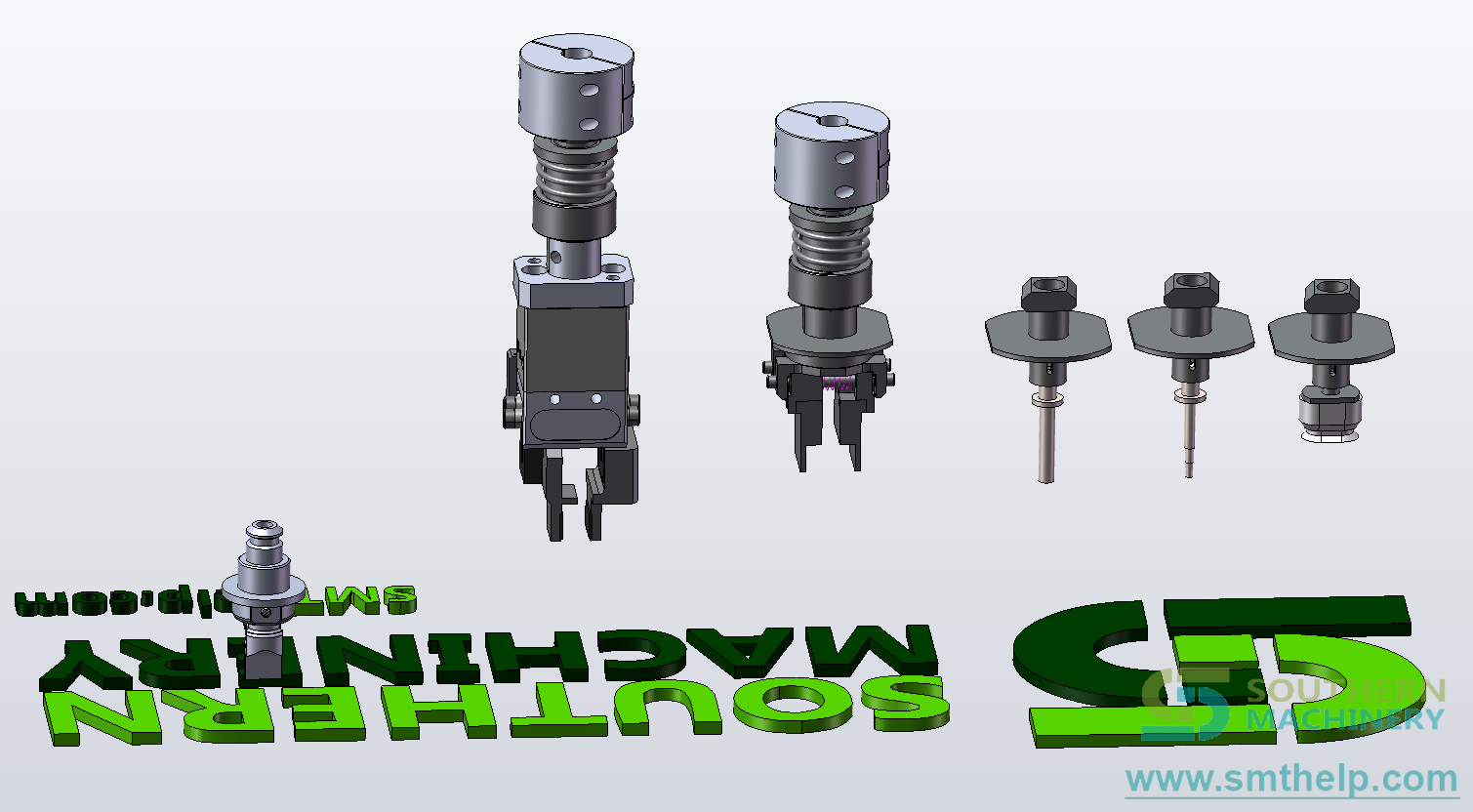
Hersteller kundenspezifischer SMT-Pipetten und Greifer
Southern Machinery konstruiert und fertigt kundenspezifische SMT-Pipetten und Greiferpipetten für Odd-Form-Bauteile. JUKI, Yamaha, Fuji, Samsung, Panasonic. Senden Sie ein Bauteil für ein Angebot.
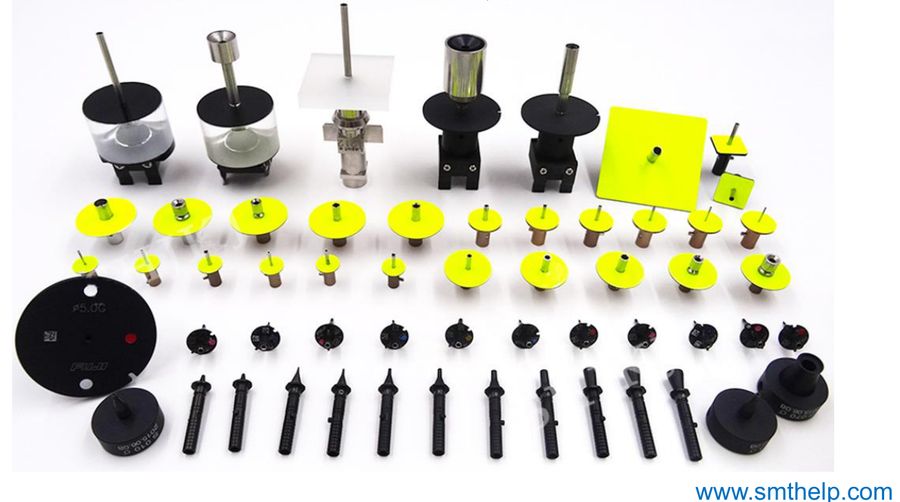
Hersteller von FUJI-SMT-Pipetten
Southern Machinery konstruiert und fertigt FUJI-kompatible SMT-Bestückpipetten – NXT H01/H04/H04S/H08/H12/H08M/H24, CP/QP/IP und kundenspezifische LED-Spitzen von ø0,3 bis ø15 mm, aus Keramik, Metall und mit Gummipad, mit OEM-Data-Matrix- und Farbmatrix-Codes. Maßhaltiger Drop-in-Ersatz, ein Tag Ersatzteil-Lieferzeit, fünf Tage für kundenspezifische Konstruktion. Fordern Sie eine Pipettenzuordnung an.

Konstruktion und Fertigung von SMT-Pipetten und Greifern für die smarte EMS-Leiterplattenbestückung
Southern Machinery konstruiert und fertigt kundenspezifische SMT-Pipetten und Greiferpipetten für die smarte EMS-Leiterplattenbestückung. 99,99 % Aufnahmequote, Spitzen aus Diamantstahl und Keramik, Plug & Play für JUKI, Yamaha, FUJI, Panasonic. Lieferung in 2–4 Wochen, über 50 Länder.
SMT-Bestückpipetten-Serie – Hersteller für die smarte EMS-Leiterplattenbestückung
Bestückpipetten für Bestücker von JUKI, Yamaha, Siemens/ASM, FUJI, Panasonic und Samsung/Hanwha: Vakuum-, Schlitz-, Greifer- und Rohrpipetten, Standard und kundenspezifisch, abgestimmt auf Ihren Kopf. Ein Lieferant für das ganze Pipettenregal.
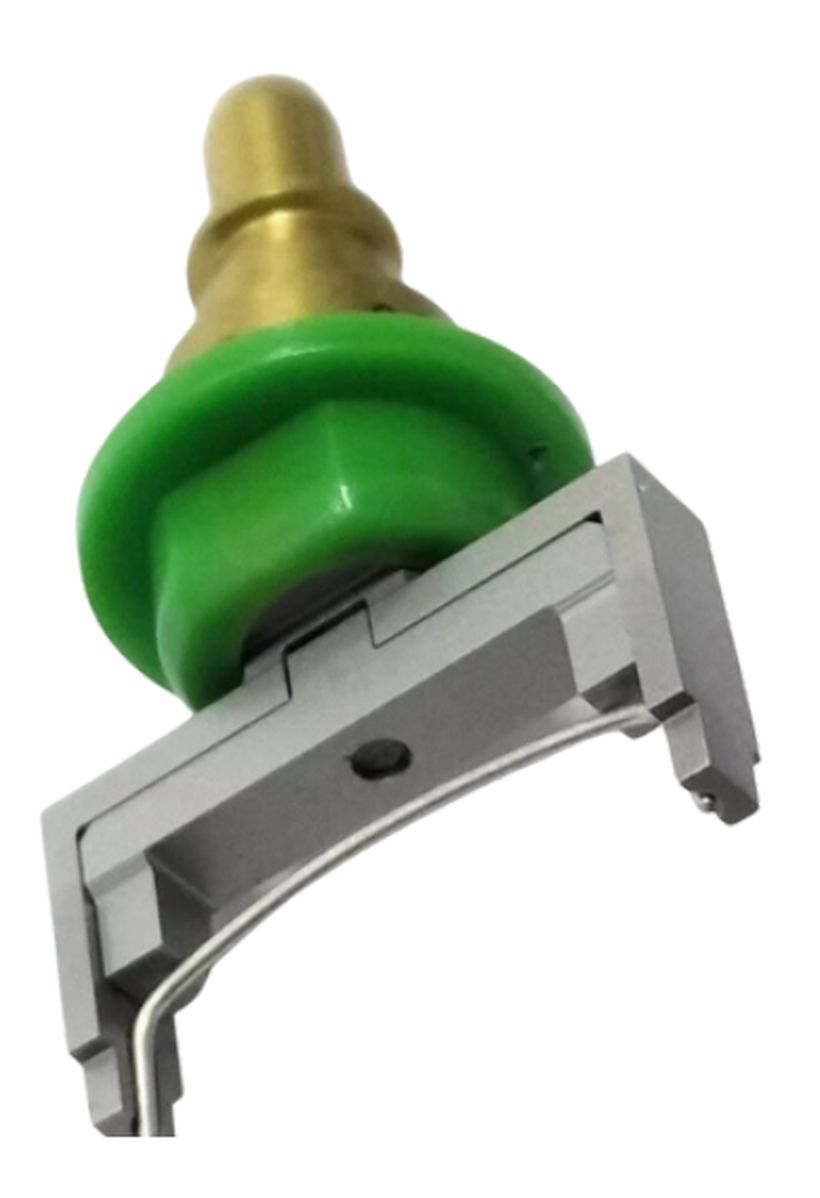
Hersteller von Panasonic-SMT-Pipetten
Southern Machinery konstruiert und fertigt Panasonic-kompatible SMT-Bestückpipetten für NPM- (D3/W/TT2/VF) und CM-Bestücker (402/602/603) – Vakuum-, Greifer-, Kalibrier- und kundenspezifische Odd-Form-Spitzen von 0402 bis Φ10 mm, aus Keramik, Metall und Gummi. N6100xxxxx-Teilenummern reproduziert, maßhaltiger Drop-in-Ersatz, ein Tag Ersatzteil-Lieferzeit, fünf Tage für kundenspezifische Konstruktion. Fordern Sie eine Pipettenzuordnung an.

Hersteller von Siemens-SMT-Pipetten für die smarte EMS-Leiterplattenbestückung
Bestückpipetten für Siemens und ASM SIPLACE, abgestimmt auf Ihren 12-Segment-Stern-Kopf, den C&P20A-Stern oder CPP-Segmente. 128 dokumentierte 7xx/9xx-Datenblätter, Keramik- und kundenspezifische Spitzen, vakuumgeprüft. Identifizieren, prüfen, nachbauen.
Einige technische Angaben auf dieser Seite (Tabellen, Dokumenttitel) erscheinen wie veröffentlicht auf Englisch.
Angebot anfordern: JUKI SMT-Bestückpipetten – Hersteller für die smarte EMS-Leiterplattenbestückung
Senden Sie Ihre Platine, Bauteilliste oder Ihr Maschinenmodell, und wir antworten mit einer Konfiguration und einem Angebot. Preise werden projektbezogen kalkuliert.