
Hersteller von Siemens-SMT-Pipetten für die smarte EMS-Leiterplattenbestückung
Die Bestückgenauigkeit endet dort, wo die Pipettenspitze das Bauteil berührt. Wir bauen diese Spitze und ordnen sie für smarte EMS-Linien zu.
Bestückpipetten für Siemens und ASM SIPLACE, abgestimmt auf Ihren 12-Segment-Stern-Kopf, den C&P20A-Stern oder CPP-Segmente. 128 dokumentierte 7xx/9xx-Datenblätter, Keramik- und kundenspezifische Spitzen, vakuumgeprüft. Identifizieren, prüfen, nachbauen.
Spezialpipetten 7xx und 9xx für den SIPLACE-12-Segment-Kopf, Keramikfamilien für den C&P20A-Stern und CPP-Segmente, Varianten mit Gummispitze für große Bauteile – dazu vollständig kundenspezifische Geometrien, abgeleitet aus Ihrem Bauteil, Ihrem Kopf und Ihren Abwurfdaten.
Wichtigste Merkmale
Fehlaufnahmen und verdrehte Bestückungen gehen auf die Spitze zurück
Eine verschlissene Bohrung, eine abgeplatzte Keramikkante oder eine verhärtete Gummilippe verändern die Vakuumsäule und die Kontaktgeometrie. Die ersten Symptome sind klein: eine gelegentliche Fehlaufnahme, ein verdrehtes 0603, eine Nacharbeit, die niemand der Pipette zuschreibt. Bis die Linie es meldet, sind Stunden an CPH verloren. Das Wartungshandbuch beschreibt den Mechanismus klar – Schmutz und Abrieb werden mit Bürste und Druckluft entfernt, und…
OEM-Lieferzeit und -Preis treffen ein Verbrauchsteil, das Sie planmäßig tauschen
Pipetten sind im Handbuch der X-Serie als Verschleißteile aufgeführt, neben Filterscheiben und Schläuchen. Verschleißteile sind ein Budgetposten, und ein Budgetposten sollte eine zweite Quelle haben. Wir ordnen über die Artikelnummer zu – die im Katalog und in Ihrer Bestellhistorie stehenden Codes 0034xxxx und N610xxxx – und bieten auf dieselbe Geometrie an, nicht nach Schätzung.
Für Odd-Form-Bauteile gibt es überhaupt keine Katalogantwort
Transformatoren, Elkos mit Hülse, Halterungen, Steckverbinder mit Rastclips: Das Datenblatt endet bei den Standardspitzengrößen. Dort beginnen Konstruktion und Fertigung – eine Greif- oder Sauggeometrie um das Bauteil herum, an Ihrem Kopf geprüft und dann wie ein Katalogteil dokumentiert, damit der nächste Ingenieur sie nachbestellen kann.
Spezifikationen
Werte wie in den Unterlagen von Southern Machinery veröffentlicht. Widersprechen sich zwei Quellen, werden beide Werte mit Quelle gezeigt.
| Primary document | Special Nozzle Catalog 7/9xx, 12/2004 · SIPLACE X Series Maintenance Manual, 02/2011 · SMT Nozzle Supplier booklet, 30 pp |
|---|---|
| Head fitment | 12-star head (C&P6/12, TwinHead) · C&P20A 20-nozzle star; CPP segments · Per your head and changer |
| Body material | Vectra LCP (A230 and variants) · Ceramic or plastic per series · Metal, plastic, ceramic per design |
| Tip / insert | PU, Alu, Steel, POM, PA6.6, Ceramic · Ceramic tip; rubber versions per table · Rubber, PU or machined gripper jaw |
| Smallest documented tip | Ø0.9 mm with 1.2 mm slot (type 731) · 0603 / 1005 chip class · Drawn to the component |
| Large-part rows | Special versions up to large SOP/QFP picks · Large-component nozzles per configuration · Φ8.0 and Φ10.0 rubber tips documented |
| Typical components | 0603, 1005, 3216, SOP, QFP · Mixed SMD placement duty · E-caps, transformers, brackets, odd-form |
| Nozzle-changer handling | Yes on 108 of 128 datasheets · Set down in the changer per manual 4.7.3 · Designed for your changer |
| Documented restrictions | e.g. 'for rubber tip 12U1, 12U3' · Wear-part list, per configuration · Stated on the approved drawing |
| Identification | Item number per datasheet · Series codes 10xx-30xx · Colour rings or laser marking |
| Cleaning - plastic special | Brush + compressed air (manual 4.7.4) · Not in bulk - CAUTION in manual · Same discipline as OEM parts |
| Cleaning - ceramic | n/a (plastic bodies) · Ultrasonic bath, distilled water, tips ~2 mm in fluid · Ultrasonic on request |
| Fill-level tolerance | n/a · ±2 mm from prescribed level (manual) · Per your cleaner's manual |
| Tooling referenced | Nozzle changer, magazine · Cartridge rack 10xx [03071700-xx], cleaning box, guiding plates · Rack or magazine-ready kitting |
| Wear mode | Bore wear, tip deformation · Ceramic chipping, vacuum loss · Designed wear limit |
| Replacement trigger | Out-of-spec after inspection · Vacuum test + visible damage · Your SPC limit on miss rate |
| Calibration | Datasheet dimensions · OEM series data · Gauge report on request; 'CALIBRATION' rows in booklet |
| Acceptance method | First article on head · First article on head · 50 / 90 / 100% match tiers |
| Cross-brand coverage | ASM / Siemens / SIPLACE focus · X-series family · JUKI, FUJI, Panasonic, Yamaha, Assembleon too |
| Custom geometry | Catalog only · Catalog only · Full design and manufacturing |
| Documentation with order | Item number + datasheet page · Series + head table · Drawing + match report |
| Order quantity | Single pieces to trays · Per head set · Trial first, then batch |
| Lead time | Per quote - not published · Per quote - not published · Short batches typical; per quote |
| Price list | Not published - inquiry · Not published - inquiry · Not published - inquiry |
| Service life | To be confirmed - not in catalog · To be confirmed - interval per machine display · Set from your line data |
| Quoting inputs we need | Item number or datasheet page · Head model + current part · Component + head photos |
Modelle, Vergleiche und offene Punkte
Open questions we disclose instead of smoothing over (6 Zeilen)
| Parameter | Catalog 7/9xx (12/2004) | X manual (02/2011) | Supplier booklet | Status |
|---|---|---|---|---|
| Series naming | '7/9xx for 12-Star Head' | 'Pipetten 7xx / 9xx' wear-part rows | '900 series (ORG.)(12HEAD)' | To be confirmed - same family, three names; match by item number |
| Item-number text | Clean 8-digit numbers | Part numbers with -xx suffixes | Some codes split across table cells | To be confirmed - verify against the drawing, not the PDF text layer |
| Nozzle service life | Not stated | Interval shown on machine display | Not stated | To be confirmed - set from your line data |
| Changer compatibility | Yes on 108 of 128 pages | Set-down procedure assumes changer | Not addressed | To be confirmed - 20 datasheets state 'No' or a restriction |
| Pickup rate '99.99%' | Not stated | Not stated | Video title claim | Supplier claim from our own video title - not a measured spec |
| Vacuum / pressure settings | Not stated | Configuration dependent | Not stated | To be confirmed - per your machine recipe |
How many nozzles your head carries - and what that means for spares (3 Zeilen)
| Head family | Nozzles per head | Sensible spare set | Changer handling |
|---|---|---|---|
| C&P6/12 and TwinHead - 12-star head | 6 or 12 (per variant) | 2 full sets per head | Yes for changer-marked 7xx/9xx |
| C&P20A - star with 20 nozzles | 20 | 1 full set + 4 rotation spares | Set down via changer (manual 4.7.3) |
| CPP - continuous pickup segments | Segment-mounted | Per segment plan | To be confirmed - per segment design |
Im Detail
A nozzle is 15 grams of plastic, ceramic or rubber - and it carries your whole placement yield
Feeders, programs and operators all get attention. The tip that actually touches every component usually gets cleaned late and replaced later. These are the three failure patterns we are asked to fix most often on SIPLACE-style lines.
- Mis-picks and skewed placements trace back to the tip. A worn bore, a chipped ceramic edge or a hardened rubber lip changes the vacuum column and the contact geometry. The first symptoms are small: an occasional miss, a rotated 0603, a rework that nobody blames on the nozzle. By the time the line flags it, hours of CPH are gone. The maintenance manual is blunt about the mechanism - dirt and wear are removed with a brush and compressed air, and…
- OEM lead time and price hit a consumable you replace on schedule. Nozzles are listed as wear parts in the X-series manual, alongside filter disks and hoses. Wear parts are a budget line, and a budget line should have a second source. We cross-reference by item number - the 0034xxxx and N610xxxx codes printed in the catalog and in your purchase history - and quote against the same geometry, not a guess.
- Odd-form parts have no catalog answer at all. Transformers, E-caps with sleeves, brackets, connectors with locking clips: the datasheet stops at the standard tip sizes. That is where design and manufacturing starts - a gripper or suction geometry drawn around the component, checked on your head, then documented like a catalog part so the next engineer can reorder it.
How a Siemens nozzle order is actually built
Nine steps, each one leaving a document. The point is not speed alone - it is that every claim on this page can be traced to a datasheet, a manual section or a test you can repeat.
- Component and head survey. You send the component (code, package, photos), the placement head (12-star, C&P20A, CPP, TwinHead) and the symptom. Head type fixes the shank, the collet seat and the changer behaviour before anything else.
- Item-number cross-reference. We match your code against the special-nozzle catalog (0034xxxx, 030xxxxx), the ASM/Siemens tables in our supplier booklet (900 and 1000 series for 12-head and 20-head) and the manual's wear-part list (20xx, 28xx, 7xx, 9xx, 10xx, 12xx, 30xx).
- Material and geometry selection. Vectra liquid-crystal polymer bodies for the special versions, with aluminium, steel, POM, PA6.6 or ceramic tip inserts depending on abrasion and weight. Rubber and PU tips for large or delicate parts - the catalog itself carries restrictions such as 'for rubber tip 12U1, 12U3'.
- Machining and moulding. Standard geometries are produced from the documented dimensions; custom tips are drawn, approved, then cut. Bore, cone angle and seat are the three features that decide whether a nozzle picks like the original.
- Functional test. Vacuum draw-through, bore clearance against the datasheet (a 731 is Ø0.9 mm with a 1.2 mm slot), and runout on a mandrel. The manual's own rule applies to our parts too: no bulk cleaning, no tips knocked against metal.
- First article on your head. A sample runs on your machine, in your program, on your component. Pickup rate and miss records are the acceptance sheet - not a laboratory certificate that never saw a feeder.
- Batch with identification. Production batches carry the item code and the colour-ring convention you already use on the 900-series parts, so the magazine slots load without retraining the operator.
- Kitting to head layout. Nozzles arrive in rack or magazine-ready sets matched to your head layout, with the cartridge-rack and cleaning-box tooling listed in the manual available in the same order.
What we actually supply for Siemens / ASM heads
The families below are named as the supplied documents name them. Where a series label differs between documents, the disclosure table says so.
- 7xx / 9xx special nozzles for the 12-star head. 128 datasheets, edition 12/2004: Vectra bodies with PU, aluminium, steel, POM, PA6.6 or ceramic tips. 108 of them are marked as handled with the nozzle changer; the rest state a restriction - verify against your head and changer firmware before ordering.
- Ceramic and plastic families 10xx / 12xx / 20xx / 28xx / 30xx. The wear-part tables of the SIPLACE X-series manual list these as nozzles and ceramic nozzles per configuration, with dedicated cleaning boxes, cartridge racks and guiding plates. We match by item number and by the head you run them on.
- Custom nozzles, grippers and rubber-tip versions. Chucking fingers, gripper assemblies, large-bore rubber tips (the booklet's Φ8.0 and Φ10.0 rows) and odd-form picks drawn from your sample - designed, manufactured and then documented like a catalog part.
Open questions we disclose instead of smoothing over
Three good documents still disagree across seven years of editions. These are the points a buyer should confirm against their own machine before trusting any supplier - including us.
How many nozzles your head carries - and what that means for spares
The manual names the head families and their nozzle counts. The table converts that into the spare-set arithmetic a planner actually needs.
What to order alongside the nozzles
Six things that turn a nozzle purchase into a working spares programme on a SIPLACE-style line.
- Nozzle cleaner (S-6200 / SCM24). The manual's cleaning tasks - brush, compressed air, ultrasonic with distilled water - are exactly what our automatic nozzle cleaners run on a schedule instead of at midnight. Manual and installation documents are on the catalog board.
- Cartridge racks and cleaning boxes. The manual lists cartridge rack 10xx [03071700-xx], cleaning box for ceramic nozzles [03055736-xx] and guiding plates. We supply compatible storage and bath tooling so tips never rest on metal.
- Rubber and PU tip versions. For large or delicate parts: the booklet's Φ8.0 and Φ10.0 rubber rows and the catalog's 'for rubber tip 12U1, 12U3' restrictions. Tip hardness is chosen against the component, not the machine.
- Colour-ring identification. The 900-series parts in the booklet carry coloured rings. We reproduce your existing colour convention or set a new one at no tooling cost - mis-slotted nozzles are an operator-error killer.
- Custom gripper assemblies. Chucking fingers, E-cap grippers and odd-form jaws - the booklet and our custom album show the families; each one starts from your sample and ends as a documented part number.
- Mixed-brand consolidation. One PO for the ASM/Siemens line and the JUKI, FUJI, Panasonic, Yamaha or Assembleon neighbours. Same matching discipline, one packing list.
The maintenance sequence the manual itself prescribes
Six steps from section 4.7 of the SIPLACE X-series manual, written for nozzles. Follow them and a requalified nozzle behaves like a new one; skip them and no supplier can save the placement yield.
- Prepare safely. ESD protection on (the manual ships an ESD wriststrap with the service box), head parked, hood secured per your machine procedure.
- Set down in the changer. 'Set the nozzles down in the nozzle changer' - manual 4.7.3. Never pull live nozzles out of a running head.
- Brush, no bulk. CAUTION in the manual: do not clean nozzles in bulk. Apply slight pressure and move the brush back and forth to lift partially dissolved dirt.
- Blow through. Compressed air through the bore, then return each nozzle to its magazine slot or cartridge rack - tips hanging free.
- Ultrasonic only for ceramic. Distilled water in the bath; only the ceramic tips enter the fluid by about 2 mm; level within ±2 mm of the prescribed height. Fill and tooling per manual 4.7.4.1.
- Verify before reload. Vacuum check and a short pickup trial on the head. A nozzle still out of spec after cleaning is a replacement, not a second wash.
Identify, verify, replicate - then support
A second source is only useful if the match is provable. This is the sequence every nozzle order runs through.
Videos
Clips aus dem YouTube-Kanal von Southern Machinery. Von YouTube wird erst etwas geladen, wenn Sie auf Abspielen drücken.
Kataloge und Dokumente
- PDFSMT Nozzle Supplier -Southern MachinerySMT Nozzle Supplier - Southern Machinery
- PDFASM Siplace Spare Parts -SMThelp 2018ASM Siplace Spare Parts - SMThelp 2018
- PDFSouthern Machinery Customized Feeder Nozzle Catalog V03Customized Feeder & Nozzle Catalog V03
- PDFS-6200 Full Automatic High-efficiency Nozzle Cleaning Machine User’s ManualNozzle care and cleaning documents
- PDFSCM24 SMT Nozzle Cleaner Installation and Commissioning GuideNozzle care and cleaning documents
- PDFNozzle Cleaning Machine InstructionsNozzle care and cleaning documents
- 3DYouTube video board - every demo clip
- 3DProduct catalog board - every PDF
- LINKMachine catalogue - file.autoinsertion.com
Technische Notizen
ARTICLE 01The mispick that costs the whole shift starts at the tip
Missed pickups rarely announce themselves - they leak CPH one board at a time, and the nozzle is usually the last suspect. Article bodies are published in English; summaries are translated. Somewhere on your line a placement head is missing one pickup in four hundred, and nobody has blamed the nozzle yet. That is the…
ARTICLE 02Vectra, ceramic or rubber: reading a nozzle datasheet like an engineer
Five fields on one catalog page tell you more than a supplier's brochure - if you know what each one constrains. Article bodies are published in English; summaries are translated. Open any page of the 7xx/9xx special-nozzle catalog and you get five fields: item number, name, material, restriction, changer handling.…
ARTICLE 03Why the 12-star head makes nozzles a line problem, not a shelf problem
One star, twelve or twenty tips, one changer: the geometry of the head decides your spares policy. Article bodies are published in English; summaries are translated. A 12-star head turns twelve nozzles as one instrument. When one tip drifts, the machine does not tell you which one - it just stops hitting its numbers.…
ARTICLE 04Never bulk-clean a nozzle: four rules printed in the ASM manual
The maintenance chapter is blunt about cleaning. Follow it and nozzles requalify; ignore it and you are buying failures. Article bodies are published in English; summaries are translated. The maintenance manual for the SIPLACE X series devotes a full section to nozzles, and one line in it is printed as a CAUTION: do…
ARTICLE 05Cross-reference before you quote: from worn part number to solved order
A worn nozzle is a document exercise - item number, head, component. Here is the checklist we run. Article bodies are published in English; summaries are translated. A worn nozzle arrives at a supplier's desk as a photograph and a hope. It leaves as one of three answers: exact match, functional match, or 'send the…
ARTICLE 06Odd-form parts do not fit standard tips - how custom geometry gets built
When the catalog stops, real engineering starts: sample, drawing, first article, documentation. Article bodies are published in English; summaries are translated. The catalog ends at the standard tip. The component in front of you - the transformer with the clip, the connector nobody has ever fed automatically -…
Vollständige Artikel auf der interaktiven Produktseite lesen →
Häufige Fragen
Welche Siemens-/ASM-Köpfe decken Sie ab?
Die 12-Segment-Kopffamilien (C&P6/12 und TwinHead laut Handbuch der X-Serie), den C&P20A-Stern mit 20 Pipetten und CPP-Segmente mit kontinuierlicher Aufnahme. Der Spezialpipettenkatalog, mit dem wir arbeiten, dokumentiert 7xx/9xx-Versionen für den 12-Segment-Kopf; die Keramik- und Kunststofffamilien 10xx, 12xx, 20xx, 28xx und 30xx werden passend zu Ihrer Konfiguration zugeordnet.
Was benötigen Sie von mir für ein Angebot?
Im besten Fall die Artikelnummer aus Ihrer Bestellhistorie oder vom Pipettenkörper. Andernfalls ein Foto der Pipette im Magazin, das Kopfmodell und das Bauteil, das sie bestückt. Fünf Minuten mit der Handykamera ersetzen eine Woche Rätselraten.
Treffen Sie OEM-Teilenummern exakt?
Wir treffen Geometrie und Funktion und sagen Ihnen, welche Stufe Sie kaufen: 50 % Übereinstimmung (funktionales Äquivalent), 90 % (Maß für Maß gemäß den Datenblattfeldern) oder 100 % (dokumentierter Nachbau einschließlich Wechslerverhalten). Kein Lieferant sollte Ihnen stillschweigend die erste Stufe zum Preis der dritten verkaufen.
Kunststoff, Keramik oder Gummi – wie wähle ich?
Die Unterlagen liefern die Übersicht: Spezialpipetten aus Vectra LCP mit Einsätzen aus PU/Alu/Stahl/POM/PA6.6/Keramik dominieren den 7xx/9xx-Katalog; die Reinigungswerkzeuge des Handbuchs sind auf Keramikfamilien ausgelegt; die Gummi-Positionen der Broschüre dienen großen Bauteilen (Φ8,0, Φ10,0). Abrasive Bauteile sprechen für Keramik; empfindliche oder unregelmäßige Bauteile für Gummi- und kundenspezifische Spitzen.
Können Ihre Pipetten über den automatischen Pipettenwechsler laufen?
108 der 128 Katalogdatenblätter nennen „Handling with Nozzle Changer: Yes“; die übrigen tragen eine Einschränkung oder ein „No“. Wir geben das Wechslerfeld für jede Position ausdrücklich an, denn eine Pipette, die mit dem Wechsler kämpft, ist schlimmer als gar kein Ersatzteil.
Wie halten Pipetten länger?
Halten Sie sich an die Disziplin des Handbuchs: keine Massenreinigung, mit leichtem Druck bürsten, durchblasen, Keramik nur im Ultraschallbad mit destilliertem Wasser auf vorgeschriebenem Füllstand (Spitzen etwa 2 mm eingetaucht, Toleranz ±2 mm) und eine Vakuumprüfung vor dem Wiedereinsetzen. Planmäßige Pipettenreinigung ist günstiger als ein ungeplanter Kopfstillstand.
Liefern Sie auch die Reinigungsgeräte?
Ja – die vollautomatische Pipettenreinigungsmaschine S-6200 und den automatischen Pipettenreiniger SCM24, mit Handbüchern auf dem Dokumentenserver. Viele Kunden kombinieren die erste Pipettenbestellung mit einem Reinigungsplan, damit die Ersatzteile in der Spezifikation bleiben.
Wie sieht es mit Preis und Lieferzeit aus?
Pipetten werden je Artikel, Menge und Übereinstimmungsstufe angeboten – eine öffentliche Preisliste gibt es bewusst nicht: Die ehrliche Zahl hängt von Ihrer Geometrie und Ihrem Volumen ab. Senden Sie die Artikelliste; ein Angebot kommt normalerweise innerhalb eines Arbeitstages.
Ähnliche Produkte
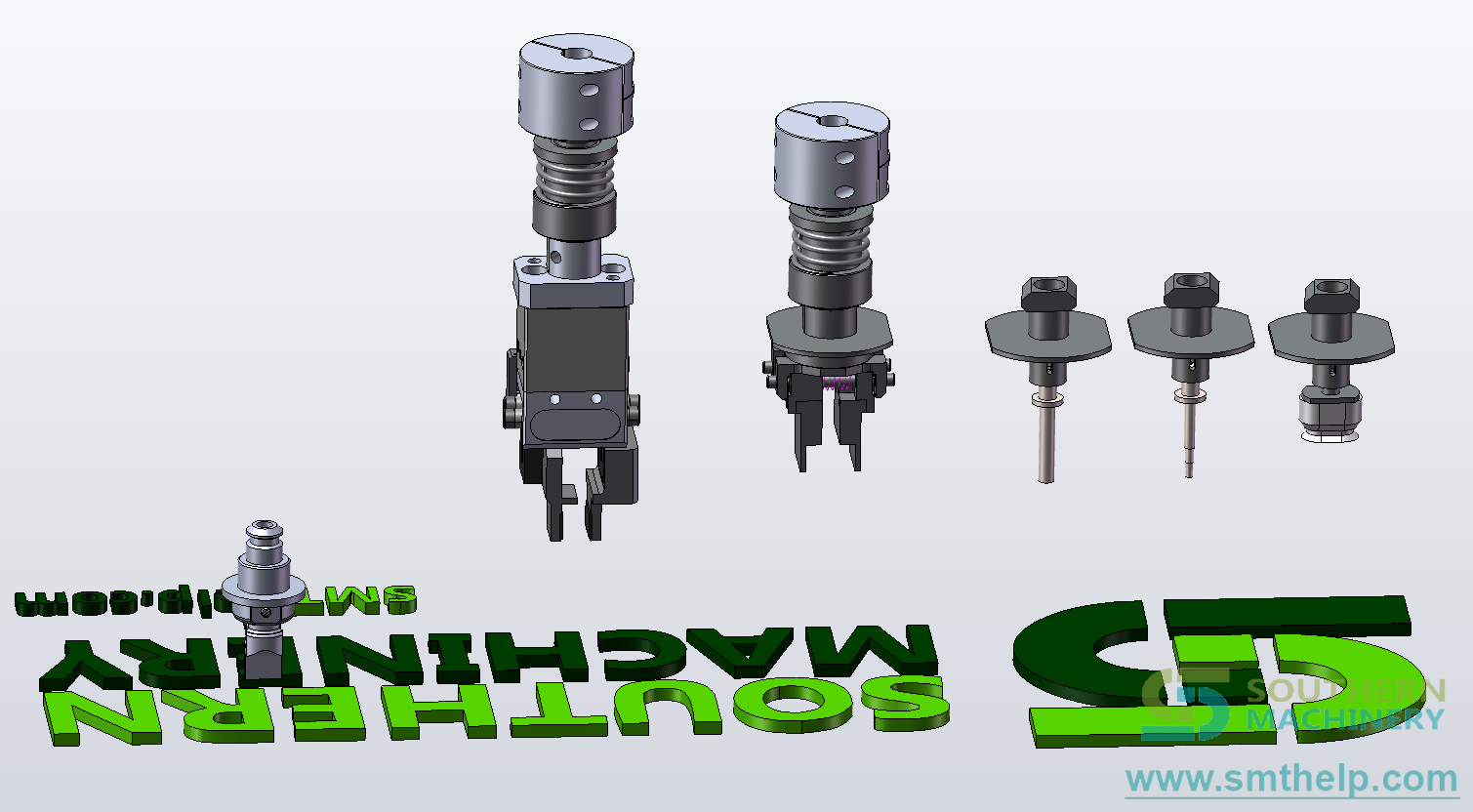
Hersteller kundenspezifischer SMT-Pipetten und Greifer
Southern Machinery konstruiert und fertigt kundenspezifische SMT-Pipetten und Greiferpipetten für Odd-Form-Bauteile. JUKI, Yamaha, Fuji, Samsung, Panasonic. Senden Sie ein Bauteil für ein Angebot.

JUKI SMT-Bestückpipetten – Hersteller für die smarte EMS-Leiterplattenbestückung
Vakuum-, Schlitz-, Greifer- und Rohrpipetten für JUKI-Bestücker KE-2010 bis KE-2060, FX-1 und die 700er-Serie. Spitzenbohrungen von 0,4 mm bis 9,5 mm, Körper aus Kupferlegierung, kundenspezifische Konstruktion, eine Woche Lieferzeit.
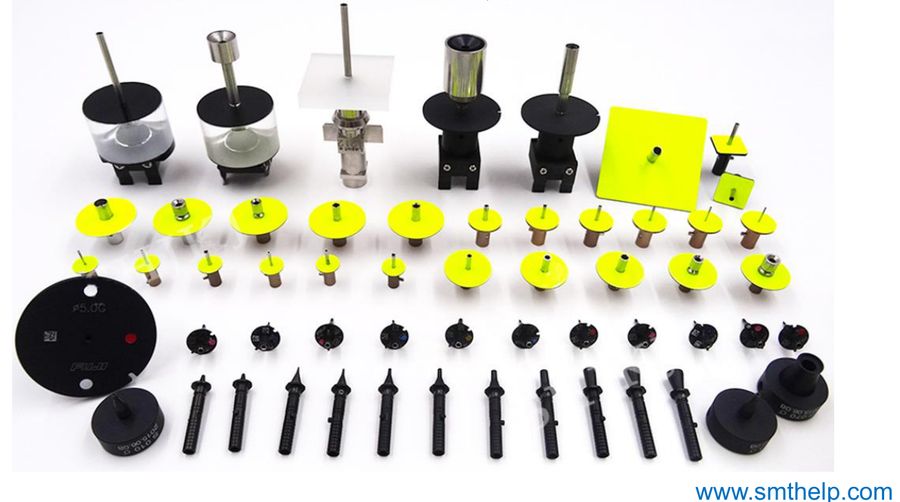
Hersteller von FUJI-SMT-Pipetten
Southern Machinery konstruiert und fertigt FUJI-kompatible SMT-Bestückpipetten – NXT H01/H04/H04S/H08/H12/H08M/H24, CP/QP/IP und kundenspezifische LED-Spitzen von ø0,3 bis ø15 mm, aus Keramik, Metall und mit Gummipad, mit OEM-Data-Matrix- und Farbmatrix-Codes. Maßhaltiger Drop-in-Ersatz, ein Tag Ersatzteil-Lieferzeit, fünf Tage für kundenspezifische Konstruktion. Fordern Sie eine Pipettenzuordnung an.

Konstruktion und Fertigung von SMT-Pipetten und Greifern für die smarte EMS-Leiterplattenbestückung
Southern Machinery konstruiert und fertigt kundenspezifische SMT-Pipetten und Greiferpipetten für die smarte EMS-Leiterplattenbestückung. 99,99 % Aufnahmequote, Spitzen aus Diamantstahl und Keramik, Plug & Play für JUKI, Yamaha, FUJI, Panasonic. Lieferung in 2–4 Wochen, über 50 Länder.
SMT-Bestückpipetten-Serie – Hersteller für die smarte EMS-Leiterplattenbestückung
Bestückpipetten für Bestücker von JUKI, Yamaha, Siemens/ASM, FUJI, Panasonic und Samsung/Hanwha: Vakuum-, Schlitz-, Greifer- und Rohrpipetten, Standard und kundenspezifisch, abgestimmt auf Ihren Kopf. Ein Lieferant für das ganze Pipettenregal.
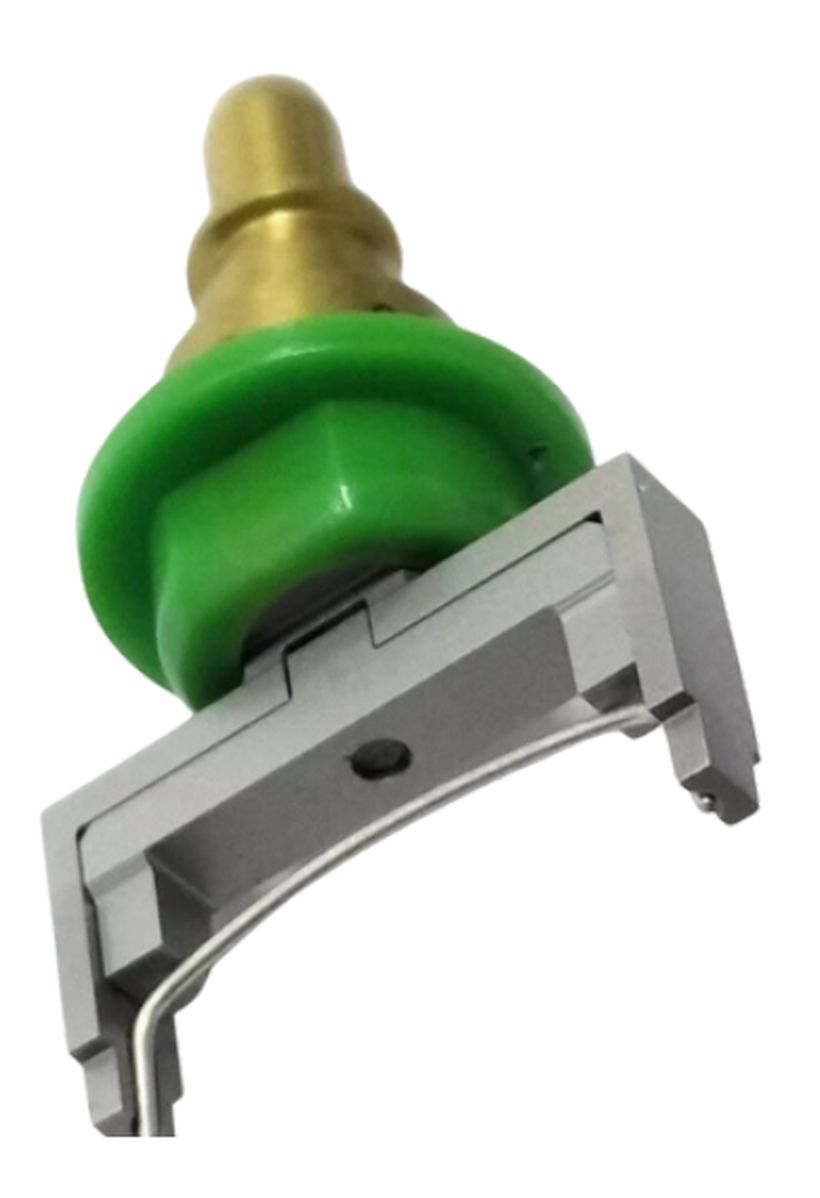
Hersteller von Panasonic-SMT-Pipetten
Southern Machinery konstruiert und fertigt Panasonic-kompatible SMT-Bestückpipetten für NPM- (D3/W/TT2/VF) und CM-Bestücker (402/602/603) – Vakuum-, Greifer-, Kalibrier- und kundenspezifische Odd-Form-Spitzen von 0402 bis Φ10 mm, aus Keramik, Metall und Gummi. N6100xxxxx-Teilenummern reproduziert, maßhaltiger Drop-in-Ersatz, ein Tag Ersatzteil-Lieferzeit, fünf Tage für kundenspezifische Konstruktion. Fordern Sie eine Pipettenzuordnung an.
Einige technische Angaben auf dieser Seite (Tabellen, Dokumenttitel) erscheinen wie veröffentlicht auf Englisch.
Angebot anfordern: Hersteller von Siemens-SMT-Pipetten für die smarte EMS-Leiterplattenbestückung
Senden Sie Ihre Platine, Bauteilliste oder Ihr Maschinenmodell, und wir antworten mit einer Konfiguration und einem Angebot. Preise werden projektbezogen kalkuliert.