
AI Radial Splicing Tape (3-hole / 5-hole, masking or kraft paper)
AI radial splicing tape that keeps the inserter running through a reel change
AI radial splicing tape is a pre-cut, adhesive splice that joins two pieces of taped radial components (capacitors, inductors, LEDs and similar parts on a paper carrier) so a radial auto-insertion machine keeps feeding when one reel or ammo box runs out. Each splice is punched with holes that line up with the tape's feed holes, so the feeder's sprocket advances straight through the joint. Southern Machinery supplies it in 3-hole and 5-hole formats, in masking paper or kraft paper, with a hand splice cutter for 12.7 mm and 15.0 mm radial tape.
Join the tail of one taped radial component reel to the head of the next in under a minute, at the feeder, without stopping the line. 3-hole and 5-hole splices in masking or kraft paper, die-cut on both faces, plus a hand splice cutter for 12.7 mm and 15.0 mm radial tape.
Key features
Re-threading costs minutes, every time
Without a splice the operator stops the station, threads the new tape through the feeder and indexes it to the first component. Multiply that by every reel on every feeder, every shift.
Office tape does not survive the sprocket
Generic tape covers the feed holes, so the sprocket pin has nothing to drive. The joint slips, tears or jams at exactly the point where nobody is watching.
A slipped joint means a mis-pitched part
If the splice shifts the pitch by even part of a hole, the next components arrive off-centre at the cutter and insertion head. That shows up as bent leads and missing parts.
Adhesive left behind ends up in the machine
Low-grade glue oozes from the joint, picks up dust and coats guides and sprockets. Now the consumable is creating maintenance work.
Ragged cuts make every splice a guess
Cutting tape with scissors leaves the end anywhere between two holes. The splice cannot register on holes that are not there.
Consumables bought ad hoc run out at night
Splice tape is cheap, so nobody plans it. Then the night shift finds an empty box and reaches for whatever tape is in the drawer.
Specifications
Figures as published in Southern Machinery documents. Where two sources disagree, both values are shown with their source.
| Application | Splicing taped radial (vertical-insertion) components on auto-insertion machines and radial tape feeders · Verified material |
|---|---|
| Standard formats | 3-hole and 5-hole · Verified material |
| Other formats | 6-hole, 2-hole, single-hole, black 3-hole: on request · To be confirmed |
| Backing | Masking paper or kraft paper · Verified material |
| Adhesive | High-viscosity, high-strength; synthetic rubber type per factory listing; masking version no residue · Verified material |
| Converting | Precision die-cut on front and back faces, enlarged holes, raised locating dots · Verified material |
| 3-hole splice size | 42 mm long × 36 mm wide (unfolded), one listing; see the open points below · To be confirmed |
| Packing | Masking: 1,000 pcs/roll · Kraft: 500 pcs/roll (Southern Machinery codes) · Verified material |
| Product codes | SCT-031000 · SCT-030500 · SCT-051000 · SCT-050500 · Verified material |
| Splice cutter | Hand tool, versions for 12.7 mm and 15.0 mm radial tape · Verified material |
| Efficiency claim | Splicing without stopping raises process efficiency by about 15% (Southern Machinery product page) · To be confirmed |
| Delivery | Packed by carton; about 2 days after order confirmation · Verified material |
| Tape standard (reference) | Radial taping commonly follows IEC 60286-2: 18 mm carrier, 12.7 mm feed-hole pitch; some larger parts at 15.0 mm · Concept illustration |
Models, comparisons and open points
Which splice for which job (4 rows)
| Situation | Start with | Why |
|---|---|---|
| Small radial parts: ceramic, film, small electrolytic capacitors, LEDs | 3-hole, masking paper | Short joint, clean release, highest splices per roll. |
| Heavier parts: larger electrolytics, inductors, long tape paths | 5-hole | More feed holes bridged means more adhesive area carrying the load. |
| Tape guides that drag, or a feeder that prefers a smooth face | Kraft paper | Coated, smooth surface slides with less friction. |
| Unusual hole pattern or longer splice | 6-hole or made to order | Send a tape sample; we confirm the pattern first. |
Where the source documents disagree, both values stay on the page (4 rows)
| Topic | Source A | Source B | How we settle it |
|---|---|---|---|
| Packing per roll | Southern Machinery page: masking 1,000/roll, kraft 500/roll | Factory listings: both backings offered at 500 and 1,000/roll | Quoted per your order; the roll count is written on the quotation. |
| 3-hole splice width | Factory listing: 42 × 36 mm | Another listing: 42 × 22 mm with 12.7 mm hole pitch (double-sided variant) | We send the drawing for the exact splice before you order. |
| Hole counts | Southern Machinery codes: 3-hole and 5-hole | Factory listings: also 6-hole, 2-hole, single-hole | 3 and 5 are stock; others are confirmed per request. |
| Cutter size meaning | Product page: 'for 12.7 mm & 15.0 mm tape' | Photos mark the blades 12.7 mm and 15.0 mm | We match the cutter to the feed-hole pitch on your tape drawing. |
In detail
What AI radial splicing tape is
AI radial splicing tape is a pre-cut, adhesive splice that joins two pieces of taped radial components (capacitors, inductors, LEDs and similar parts on a paper carrier) so a radial auto-insertion machine keeps feeding when one reel or ammo box runs out. Each splice is punched with holes that line up with the tape's feed holes, so the feeder's sprocket advances straight through the joint. Southern Machinery supplies it in 3-hole and 5-hole formats, in masking paper or kraft paper, with a hand…
Four moves at the feeder, no tools beyond the cutter
The method below is the one printed on the source sheets for this tape. It is the same for 3-hole and 5-hole splices; the longer splice simply bridges more feed holes.
- Cut on the feed hole. Cut both tape ends through the centre of a feed hole, square to the tape. The splice cutter does this in one press, at the right pitch.
- Peel the liner. Lift the backing paper off the splice. The die-cut liner means your fingers never touch the adhesive face.
- Seat the locating dots. Press the raised locating dots on the splice into the feed holes of both tape ends, so the two ends sit at the original pitch, then press down.
- Fold and press. Fold the splice along its centre line over the other face of the tape and press. The joint is now closed on both faces and ready to feed.
What is in the splice, what it changes, and what you get
Six things the tape and cutter do, written the way your process engineer and your purchasing manager will each want to read them.
- High-tack adhesive.
- Die-cut both faces.
- Locating dots.
- Two backings.
- No-touch liner.
- Splice cutter.
Choose by hole count, backing and tape pitch
Four standard splice codes cover most radial lines. Other hole counts and a black version are made to order.
- SCT-031000. The everyday splice for small radial parts. Clean release, no residue.
- SCT-030500. Coated kraft face for low friction through tape guides.
- SCT-051000. Longer bridge across five feed holes for heavier parts and long tape paths.
- SCT-050500. Five-hole strength with the smooth kraft surface.
- Radial tape splice cutter. Prepares a square cut on the feed hole so the splice registers first time.
- Made to order. Tell us the hole pattern and backing you need; we confirm the drawing before production.
- Which splice for which job.
Where the source documents disagree, both values stay on the page
We do not average conflicting numbers or quietly pick one. Here is each disagreement and how we settle it for your order.
Five steps from a tape photo to a running splice
A photo or sample, the tape width and feed-hole pitch, the component and the machine model.
Videos
Clips from the Southern Machinery YouTube channel. Nothing loads from YouTube until you press play.
Catalogues and documents
- PDFSplice Tape and Splice toolsSplice tape and splice tools
- PDFSMT Splicing cart and Splicing toolsSMT splicing cart and splicing tools
- PDFC24639000 HAND SPLICING TOOL 3DHand splicing tool C24639000, 3D drawing
- PDFAI SMT spare parts - 2020AI and SMT spare parts 2020
- PDFS3000 Radial Insertion machine 2024S3000 radial insertion machine 2024
- PDFS3010A Radial InserterS3010A radial inserter
- PDFCarrier Clips for UIC Radial Insertion Machine 2018Carrier clips for UIC radial insertion machines
- PDFS-300B Fully Automatic High-Speed Molding and Taping MachineS-300B molding and taping machine
- PDFRadial Feeder User ManualRadial feeder user manual
- PDFSMThelp Auto Insertion PCB assembly requirementsAuto insertion PCB assembly requirements
- 3D↗ file.autoinsertion.comYouTube video board
- 3D↗ file.autoinsertion.comProduct catalog board
- 3DS3000 radial insertion machine
- 3DS-300B radial molding and taping machine
- 3DS4000 axial insertion machine
- 3DS3010A radial auto insertion
- LINKMachine catalog: file.autoinsertion.com
Engineering notes
01 · 3 min readThe cheapest part on your radial line is the one that stops itA splice costs less than the component next to it. The stop it prevents costs more than the shift's coffee budget.Read the article
Article text is kept in English on every language version: these are technical pieces and a machine translation would blur the details. Ask a production manager what stops a radial line and you will hear about bent leads, a worn cutter, a board that warped in the oven. Now look at the downtime log. The most common…
Look at what actually stopped the line
Ask a production manager what stops a radial line and you will hear about bent leads, a worn cutter, a board that warped in the oven. Now look at the downtime log. The most common entry is not a failure at all. It is "reel change." A feeder ran empty, and the machine waited. A reel change is not dramatic, so nobody…
02 · 3 min readThree holes or five: the splice choice most engineers make by habitHole count is a load decision, not a preference. Here is how to decide it in one minute.Read the article
Article text is kept in English on every language version: these are technical pieces and a machine translation would blur the details. Walk around a dozen factories and ask why they use the splice they use. The honest answer is usually: that is what the last buyer ordered. Habit is fine until a heavy part starts…
Nobody chose 3-hole. It was just in the drawer.
Walk around a dozen factories and ask why they use the splice they use. The honest answer is usually: that is what the last buyer ordered. Habit is fine until a heavy part starts pulling joints apart halfway down the feeder. A splice carries load. The feeder pulls the tape forward one pitch at a time; the guides bend…
03 · 3 min readMasking paper or kraft: choose the backing by the machine, not the price listTwo backings, two behaviours in the tape path. Your guides already know which one they prefer.Read the article
Article text is kept in English on every language version: these are technical pieces and a machine translation would blur the details. Most buyers treat masking and kraft as two colours of the same thing. Pick the cheaper one, move on. The tape path does not see it that way. The backing is the surface that slides…
The backing is not decoration
Most buyers treat masking and kraft as two colours of the same thing. Pick the cheaper one, move on. The tape path does not see it that way. The backing is the surface that slides over every guide between the reel and the insertion head. Masking paper carries a high-viscosity masking adhesive that holds firmly and…
Frequently asked questions
What is AI radial splicing tape used for?
It joins the end of one reel or ammo box of taped radial components to the start of the next, so a radial (vertical) auto-insertion machine or a radial tape feeder keeps feeding without being re-threaded. The splice has holes that match the tape's feed holes, so the feeder drives through the joint.
Should I use 3-hole or 5-hole splices?
Start with 3-hole for small, light radial parts and short tape paths. Move to 5-hole for heavier parts such as larger electrolytic capacitors and inductors, or where the tape bends around several guides, because the longer splice bridges more feed holes and carries the load over more adhesive area. 6-hole is available on request.
Masking paper or kraft paper: what is the difference?
Masking paper uses a high-viscosity masking adhesive that holds well and leaves no residue. Kraft paper is also high-viscosity but has a coated, smooth surface that slides with less friction through tape guides. If you are unsure, trial both on the same feeder for a week.
Which machines does it fit?
Radial auto-insertion machines that run paper-carrier radial tape, including Southern Machinery's S3000 and S3010A, and radial tape feeders on SMT placement machines. Because tape suppliers differ, we confirm fit from a photo or sample of your tape before you order.
Can I use it on axial (horizontal) tape?
No. Axial tape has a different construction with no feed holes on a paper carrier. Ask us for the horizontal-insertion splice tape instead.
What does the splice cutter do, and which size do I need?
It cuts the radial tape square through the centre of a feed hole so the splice registers at the correct pitch. It comes in versions marked for 12.7 mm and 15.0 mm tape. Most radial taping uses a 12.7 mm feed-hole pitch; some larger parts are taped at 15.0 mm. Check your tape drawing, or send us a photo with a ruler and we will tell you.
How is a splice made?
Cut both tape ends through the centre of a feed hole, peel the liner, press the splice's locating dots into the feed holes of both ends, then fold the splice along its centre line over the other face and press. Do it at the reel or feeder input, never inside a running machine.
How long can I store it?
Keep rolls sealed, out of direct sun and away from heat. For Southern Machinery's SMD splice tape the published guidance is roughly six to twelve months at about 10 to 30 °C; ask us for the guidance that applies to the AI tape batch you receive.
What are the packing and lead time?
Splices come on rolls (1,000 per roll for masking paper and 500 per roll for kraft paper on our standard codes), packed by carton. Orders typically ship about 2 days after order confirmation. Tell us your monthly use and we plan the quantity with you.
How do I get a quote?
Send a close-up photo of your tape, its width and pitch, the component type, your machine or feeder model and roughly how many splices you use per month, to info@smthelp.com or WhatsApp +86 136 0256 2576. We reply with the matching codes and a written quotation.
Related products

S-300B Radial Lead Molding and Taping Machine
S-300B radial lead molding and taping machine: forms the lead pitch, tests polarity and value, then tapes 180 plus or minus 20 components a minute, boxed or reeled.

SMT Feeder Calibration Jig
Check feeder pick-up position, feeding movement and alignment before the feeder goes back on the SMT line. CCD camera, LCD monitor, X/Y/H adjustment, FUJI NXT fixture. 220 V, 45 kg - all values marked with their source.
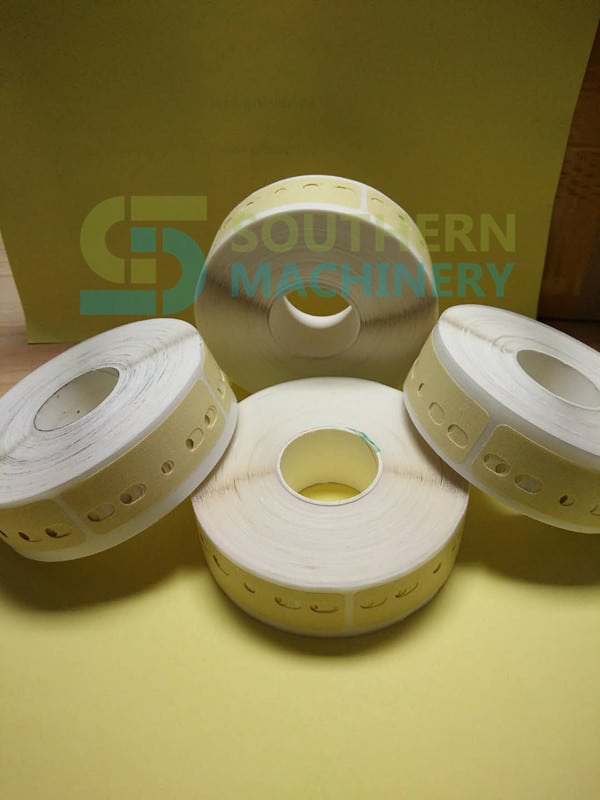
SCT AI Splice Tape for THT Radial Taped Components
High-viscosity AI splice tape for THT radial taped components (capacitors, inductors, diodes) on 12.7 mm and 15.0 mm tape. Masking or kraft paper, die-cut 3/5/6-hole patterns, no residual glue, +15% feeding efficiency. SCT series from Shenzhen Southern Machinery.
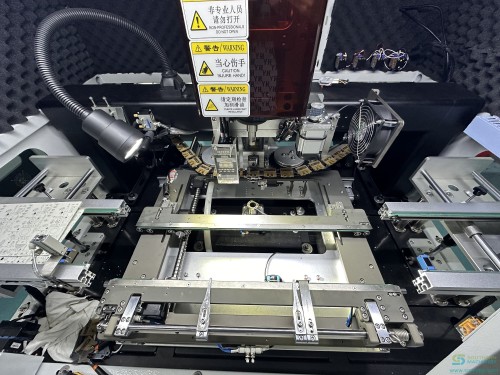
S3000 Radial Insertion Machine
S3000 radial insertion machine for THT PCB assembly: taped radial components inserted at up to 20,000 CPH, 0-360 degree insertion angle, 10 feeder stations and machine-vision hole correction.

S4000 Axial Insertion Machine
S4000 axial inserter: 20,000 CPH published top speed, 5-60 modular feeder stations, any-angle insertion on a servo rotary table, dual jumper-wire feeders, 0.79-2.36 mm PCB, 50 x 50 to 400 x 300 mm boards. Servo-driven, EtherCAT, MES-ready.
Request a quote for AI Radial Splicing Tape (3-hole / 5-hole, masking or kraft paper)
Send your board, component list or machine model and we reply with a configuration and quotation. Prices are quoted per project.