
SMT-Feeder-Kalibriervorrichtung – visuelle Prüfung der Feedergenauigkeit für die smarte EMS-Leiterplattenbestückung
SMT-Feeder-Kalibriervorrichtung für die smarte EMS-Leiterplattenbestückung
Prüfen Sie Aufnahmeposition, Vorschubbewegung und Ausrichtung eines Feeders, bevor er zurück in die SMT-Linie geht. CCD-Kamera, LCD-Monitor, X/Y/H-Justage, FUJI-NXT-Aufnahme. 220 V, 45 kg – alle Werte mit Quellenangabe.
Die meisten Bestückfehler, die wie Maschinenprobleme aussehen, beginnen im Feeder. Diese Vorrichtung gibt Ihrem Instandhaltungsteam eine Tischstation, an der der Feeder montiert, die Aufnahmeposition auf einem Monitor betrachtet und die Ausrichtung bestätigt wird, bevor der Feeder zurück in die Maschine geht.
Eine eng verwandte Seite behandelt dieselbe Feeder-Kalibrierstation: SMT-Feeder-Kalibriervorrichtung für FUJI NXT (S-FFCJ10) (Feeder und Serviceausrüstung).
Wichtigste Merkmale
Aufnahmeversatz, der wie ein Maschinenfehler aussieht
Ein verschlissener oder reparierter Feeder kann das Bauteil leicht versetzt bereitstellen. An der Maschine wirkt das wie ein Bestückversatz oder ein Ausrichtungsproblem, und die Fehlersuche beginnt an der falschen Stelle.
Abwurf- und Störungsraten, die mit der Schicht schwanken, nicht mit dem Bauteil
Fördert ein Feeder ungleichmäßig, reagiert die Linie mit Verlangsamung oder Stillstand. Die Kosten fallen als Stillstand und Nacharbeit an, und beides wird dem Produkt statt dem Feeder zugeschrieben.
Gebrauchte Feeder, die bei Eingang nie geprüft wurden
Gekaufte oder getauschte Feeder kommen mit unbekannter Vorgeschichte. Ohne Eingangsprüfung ist die erste Produktionsplatine der Abnahmetest – und die Fehler, die sie erzeugt, werden doppelt bezahlt.
Instandhaltung, die wiederholt statt dokumentiert wird
Geht ein Feeder nach mündlicher Übergabe wieder in Betrieb, wiederholt der nächste Techniker dieselbe Prüfung von vorn. Eine Tischstation mit schriftlicher Prozedur macht daraus eine Aufzeichnung.
Gegenprüfung, die davon abhängt, wer Schicht hat
Einen Feeder nach Augenmaß gegen ein Gurtloch unter Hallenbeleuchtung zu beurteilen, ist in jeder Schicht ein anderer Test. Eine Kamera, ein Fadenkreuz und eine feste Prozedur machen dasselbe Urteil reproduzierbar.
Ein Maschinenproblem, das eigentlich ein Feederproblem ist
Beides schnell zu trennen, ist mehr wert als jede der beiden Reparaturen. Eine Vorrichtung repariert keine Feeder; sie verkürzt die Diagnose.
Spezifikationen
Werte wie in den Unterlagen von Southern Machinery veröffentlicht. Widersprechen sich zwei Quellen, werden beide Werte mit Quelle gezeigt.
| Product model name | SFCJF1 FUJI SMT Feeder Calibration Jig (packing list, quotation file) · FUJI NXT feeder calibration jig (manual and product sheet) · Machine name plate: feeder calibration jig · To be confirmed as the current public model naming |
|---|---|
| Purpose | Feeder calibration jig for FUJI NXT feeders · Feeder pick-up position and feeding accuracy check before line use · - · Confirmed use, to be confirmed per machine model |
| Working voltage | 220 V / AC 50 Hz, 60 W · 220 V / AC 50 Hz, 60 W · One source states 110 / 220 V AC, 50 / 60 Hz, 60 W · To be confirmed - two voltage options appear in the sources |
| Machine material | Aluminium and iron · Not stated · - · To be confirmed |
| Working air pressure | 5 kg/cm2 · Not stated · - · To be confirmed - confirm whether pneumatic supply is required and in which units |
| CCD camera magnification | 50X · 50X CCD camera stated in the box list · - · To be confirmed |
| Lighting system | Ring LED lighting · Not stated · - · To be confirmed |
| Display system | Ultra-bright colour LCD display · 7 inch LCD monitor stated in the box list · One product image states a 12 inch colour LCD monitor · To be confirmed - the sources state two different screen sizes |
| Feeder control zones | 8 x 2 mm / 12 x 4 mm / 16 x 8 mm / 24 x 8 mm · Not stated · - · To be confirmed - confirm the meaning of each zone before use |
| Adjustment axes | X, Y, H three-axis adjustment with high-accuracy wheel-gear drive · X / Y and focal adjustment shown on the annotated product image · - · To be confirmed for the current mechanism |
| Lever simulation | Electric drive with single and continuous strike lever simulation of machine movement · Single or continuous strike simulation stated in the manual · - · To be confirmed for the current configuration |
| Calibration reference | Standard calibration ruler to adjust component centre; cross cursor checking on the monitor · Calibration ruler and cross cursor checking stated · - · To be confirmed - the reference supplied with the current package |
| Machine size | 500 x 350 x 550 mm · 350 x 500 x 550 mm · - · To be confirmed - two orientations of the same numbers appear |
| Machine weight | 45 kg · 45 kg · Packing list states net 13 kg / gross 40 kg · To be confirmed - the packing list and the machine weight disagree |
| Export packing size | Not stated · Not stated · 650 x 460 x 510 mm, 0.1525 CBM · To be confirmed for current export packing |
| Box contents | Not stated · Machine unit, LCD monitor, CCD camera, calibration ruler, user manual · - · To be confirmed for the current standard package |
| Machine operation | Key operation · Described as a step-by-step procedure with monitor observation · - · To be confirmed |
Im Detail
Feeder problems arrive on the line wearing a different name
A feeder that is out of alignment does not announce itself. It presents as a placement fault, so the process engineer changes a recipe, the operator changes a nozzle, and the real cause stays in the maintenance room until someone puts the feeder on a bench and looks at it directly.
- Pick-up offset that looks like a machine fault. A worn or repaired feeder can present the component slightly off. On the machine that reads as a placement shift or an alignment problem, and the investigation starts in the wrong place.
- Throw and jam rates that move with the shift, not the part. When a feeder feeds inconsistently, the line reacts by slowing down or stopping. The cost lands as downtime and rework, and both are attributed to the product rather than to the feeder.
- Second-hand feeders that were never checked on arrival. Purchased or traded feeders arrive with unknown history. Without an incoming check, the first production board is the acceptance test, and the failures it produces are paid for twice.
- Maintenance that is repeated instead of recorded. When a feeder is returned to service on a verbal handover, the next technician repeats the same check from scratch. A bench station with a written procedure turns that into a record.
- Cross-checking that depends on whoever is on shift. Judging a feeder by eye, against a tape hole, under shop lighting, is a different test on every shift. A camera, a cross reference and a fixed procedure make the same judgement repeatable.
- A machine problem that is actually a feeder problem. Separating the two quickly is worth more than either fix. A jig does not repair feeders; it makes the diagnosis shorter.
Four things a maintenance technician can actually see
The jig is an observation and adjustment station. It does not repair a feeder and it does not test placement quality. What it does is put the feeder in a repeatable state so four specific things can be seen and adjusted rather than guessed.
- Pick-up position. The position the nozzle takes the component from, viewed through the camera against a cross reference or calibration ruler.
- Feeder pitch and feeding movement. Whether the feeder advances one pitch consistently, and whether the lever or thimble movement behaves the same way on every cycle.
- Tape guide condition. Wear and damage on the tape guide cover, which is a common cause of unstable feeding long before it becomes a placement fault.
- Alignment against the feeder base. Whether the feeder body itself sits square on the fixture, which separates a bent feeder from a misadjusted feeder.
From feeder on the bench to feeder back on the line
The manual describes the procedure as a fixed sequence. This is that sequence, in the order the technician performs it.
- Confirm the feeder. Check the feeder series, the tape width and the pitch against the fixture before mounting anything.
- Mount on the jig base. Seat the feeder on the feeder foundation and clamp it so it cannot shift while the camera is focused.
- Focus and zero the reference. Set the camera focus and align the cross reference on the monitor to the calibration ruler or master reference.
- Advance and observe. Step the feeder forward, watch the pick-up position on the monitor, and use single or continuous lever simulation to observe repeated cycles.
- Adjust X, Y or H. Correct the supported adjustment points, then re-check rather than adjusting more than once and hoping.
- Re-check before release. Run the feeder again through the same observation and confirm the position holds across repeated cycles.
Three things decide whether it works in your maintenance room
A calibration jig is only useful if it accepts the feeder you actually own, holds it in the position the machine expects, and gives your technician a reference they can read the same way twice. Each of those is a configuration question, answered before a price is quoted.
- The feeder series it accepts. The jig base and its sub-bases determine which feeder families can be mounted. The published sheet names a set of feeder control zones; the exact accepted list is confirmed against your feeder part numbers.
- The fixture that positions it. A repeatable bench check needs the feeder to sit in the same place every time. The feeder foundation and the locating pins are what turn a judgement into a measurement.
- The reference the technician reads. The monitor cross reference and the calibration ruler are the reference. Whichever reference is supplied has to be the one your written procedure names, or the procedure is worthless.
- Power and air at the bench. The product sheet states a working voltage and an air pressure requirement. Both belong on the quote, because a bench without the right supply is a bench that does not get used.
- Where it sits in your feeder population. A jig earns its place next to the feeder repair bench, in incoming inspection, or in the spare-feeder store. Which one depends on how many feeders you run and how often they come back.
- What it does not cover. It does not verify placement accuracy on the machine, it does not replace the machine calibration routine, and it does not cover feeder types outside the confirmed list. Those are separate jobs.
Where the documents disagree, both values stay on the page
A specification table that quietly picks one of two numbers is worth less than one that shows both. The items below do not agree across the source documents, or are stated in only one of them. Confirm each against the current drawing for your configuration before you place an order.
What you choose when you order
Each of these is a documented part of the bench station rather than a custom engineering project, and each one changes what the jig can accept.
- Feeder base and sub-bases. The base that holds the feeder square, plus the sub-bases that let different feeder families be mounted in a repeatable position.
- LCD monitor. The screen the technician reads. Screen size is one of the open points on this page and is confirmed before quotation.
- CCD camera with magnification. The observation head. The published magnification is 50X, to be confirmed for the current build.
- Ring LED lighting. The illumination around the observation point, which is what makes a tape hole and a cross reference readable on the monitor.
- Calibration ruler or master reference. The reference the cross cursor is aligned to. The supplied reference has to match the one named in your written procedure.
- Single or continuous lever simulation. Electric drive that simulates machine lever movement, in single strike or continuous mode, so repeated cycles can be observed.
- User manual and training. Written operating procedure, plus remote or on-site guidance for the technicians who will actually run the bench.
Six steps from feeder on the bench to feeder released
The manual describes the procedure as a sequence, and the sequence is the deliverable. A jig without a written procedure is a camera on a desk.
- Scope and safety. Bench work only, on a de-energised feeder outside the machine. This page is not authorisation to service, adjust or operate a placement machine.
- Send your feeder details. A feeder that is out of alignment does not announce itself. It presents as a placement fault, so the process engineer changes a recipe, the operator changes a nozzle, and the real cause stays in the maintenance room until someone puts the feeder on a bench and looks at it directly.
Videos
Clips aus dem YouTube-Kanal von Southern Machinery. Von YouTube wird erst etwas geladen, wenn Sie auf Abspielen drücken.
Kataloge und Dokumente
- PDFSMT Feeder Calibration jig - product brochureFeeder calibration documents
- PDFFeeder Calibration Jig Operation ManualFeeder calibration documents
- 3DMachine catalogue boardContinue browsing
- 3DYouTube video boardContinue browsing
- 3DFeeder catalogue and feeder family pagesRelated feeder material
- PDFBelt feeder brochureRelated feeder material
- PDFBelt feeder scope of useRelated feeder material
Technische Notizen
Note 01The placement fault that is really a feeder fault
When the same component drifts on one lane and not another, the recipe is rarely the answer. Full articles are in English. The summary above carries the argument in your language. A line runs three shifts. On the night shift a particular lane starts throwing components, and the morning shift finds the placements…
Note 02What actually happens to a feeder after a repair
A returned feeder is not a restored feeder until somebody has looked at it. Full articles are in English. The summary above carries the argument in your language. A feeder comes off the machine after a jam, a crash or a scheduled strip. It goes to the repair bench, something is replaced or cleaned, and it goes back…
Note 03Second-hand feeders are an incoming inspection problem, not a production problem
The cheapest feeder in the market is one that fails on your line instead of on the supplier's bench. Full articles are in English. The summary above carries the argument in your language. A batch of second-hand feeders arrives. Some are clean, some have been opened, some have unknown history and mismatched wear.…
Note 04How to judge whether feeder calibration is even your problem
Some lines have a placement quality problem that no feeder jig will touch. Full articles are in English. The summary above carries the argument in your language. A production manager buys a jig because placement quality is poor. Three months later the quality is the same, because the drift is in the machine, the…
Note 05One bench, one operator: making the check fast enough that people actually do it
A verification step that takes twenty minutes does not survive a busy shift. Full articles are in English. The summary above carries the argument in your language. The most accurate procedure in the world is skipped when the line is behind and the shift is ending. Every maintenance system in every factory has this…
Note 06What a feeder jig does not do, and why that matters when you buy one
The claims you should refuse to hear from any supplier, including us. Full articles are in English. The summary above carries the argument in your language. A feeder calibration jig does not repair feeders, does not verify placement accuracy on the machine, does not replace the machine's own calibration routine, and…
Vollständige Artikel auf der interaktiven Produktseite lesen →
Häufige Fragen
Ist sie mit meiner Maschine und meinem Feeder kompatibel?
Die Kompatibilität wird vor dem Angebot anhand Ihres Maschinenmodells, der Feederserie, der Feederbreite und der Teilenummer bestätigt. Grundplatte und Unterbauten bestimmen, was montiert werden kann; die Teilenummer des Feeders ist daher die nützlichste Angabe, die Sie uns senden können. Wir sagen es Ihnen, wenn eine andere Aufnahme nötig ist, statt Ihnen die Standardausführung zu verkaufen.
Welche Markennamen erscheinen auf dieser Seite, und bedeutet das eine Partnerschaft?
FUJI, Panasonic, Samsung, JUKI und I-pulse erscheinen hier nur zur Beschreibung der Maschinen und Feeder, für die eine Vorrichtung passen soll. Die Nennung einer Marke zur Definition einer Anpassungsanforderung ist keine Aussage über eine Autorisierung, OEM-Beziehung oder Zertifizierung, und wir erheben keinen solchen Anspruch.
Wie genau ist sie?
Wir veröffentlichen für diese Vorrichtung keinen Genauigkeitswert, weil in den Unterlagen von Southern Machinery, auf denen diese Seite beruht, keiner steht. Handbücher Dritter nennen Werte für ihre eigenen Maschinen; diese sind keine Aussage über unsere. Benötigen Sie eine zugesicherte Toleranz für die Abnahme, fordern Sie sie vor der Bestellung schriftlich an, und wir bestätigen, was zugesagt werden kann.
Was ist im Lieferumfang enthalten?
Die Bedienungsanleitung nennt Maschineneinheit, LCD-Monitor, CCD-Kamera, Kalibrierlineal und Benutzerhandbuch. Der aktuelle Standardumfang wird vor dem Angebot bestätigt, einschließlich der Monitorgröße, die zu den offenen Punkten dieser Seite gehört.
Können Sie unsere Techniker schulen?
Ja. Eine Fernanleitung für die Techniker, die die Station bedienen, kann im Auftrag enthalten sein; Unterstützung vor Ort kann bei größeren Feederbeständen besprochen werden. Nennen Sie uns die Zahl der Techniker und ihre Erfahrung mit der Maschinenmarke.
Was kostet sie, und wie lang ist die Lieferzeit?
Preis und Lieferzeit hängen von Konfiguration, Stromversorgung am Zielort, Menge und aktueller Auslastung ab. Senden Sie Ihre Feederdaten, und wir bestätigen beides in einem aktuellen Angebot. Wir veröffentlichen keine historischen Preise oder Lieferzeiten.
Liefern Sie auch die Feeder?
Ja. Die Vorrichtung ist ein Teil eines breiteren Angebots aus Feederlieferung, Ersatzteilen und Instandhaltung und kann zusammen mit Feedern, Unterstützung beim Feeder-Reparaturablauf und kompletter SMT/THT-Linienintegration angeboten werden.
Senkt das unsere Abwurfquote?
Wir nennen keinen Prozentsatz. Ein falsch ausgerichteter Feeder trägt zum Abwurf bei, und seine Korrektur beseitigt eine Ursache, aber Abwurf entsteht auch durch Gurt, Bauteil, Pipette, Maschine und Umgebung. Messen Sie Ihre eigene Abwurfquote vorher und nachher an derselben Feederfamilie und lassen Sie diese Zahl entscheiden.
Ähnliche Produkte

SMT-Feeder-Kalibriervorrichtung für FUJI NXT (S-FFCJ10)
SMT-Feeder-Kalibriervorrichtung S-FFCJ10 von Southern Machinery für FUJI-NXT-Feeder: 50-fache CCD-Abbildung, digitale X-Y-Mikrometer, Nullung mit Meisterlehre, Prüfung der Aufnahmeposition auf ±0,25 mm, Kontrollzonen für 8/12/16/24 mm. Spezifikation, Videos, Dokumente und Angebot.
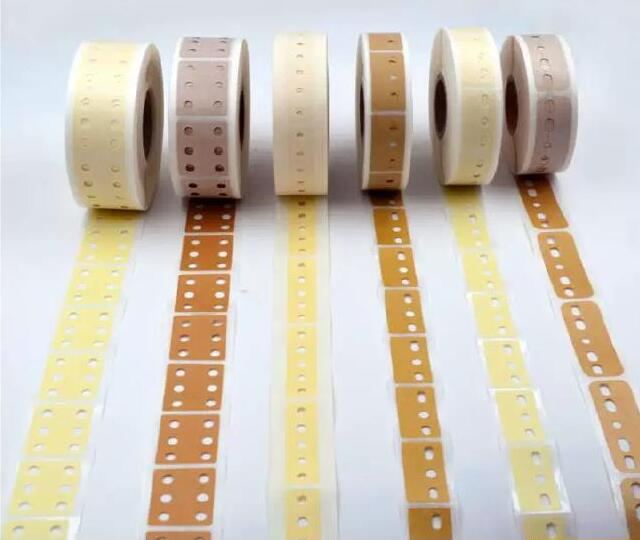
AI-Radial-Spleißband 3/5/6 Loch & Spleißschneider
AI-Radial-Spleißband für vertikale Bestückautomaten: 3-Loch und 5-Loch (6-Loch auf Anfrage), Krepp- oder Kraftpapier, stark haftend, beidseitig gestanzt, dazu ein Radialgurt-Spleißschneider für 12,7 / 15,0 mm.

S-300B Radial-Biege- und Gurtmaschine
Radial-Biege- und Gurtmaschine S-300B: formt das Anschlussraster, prüft Polarität und Wert und gurtet dann 180 ± 20 Bauteile pro Minute, in Box oder auf Rolle.
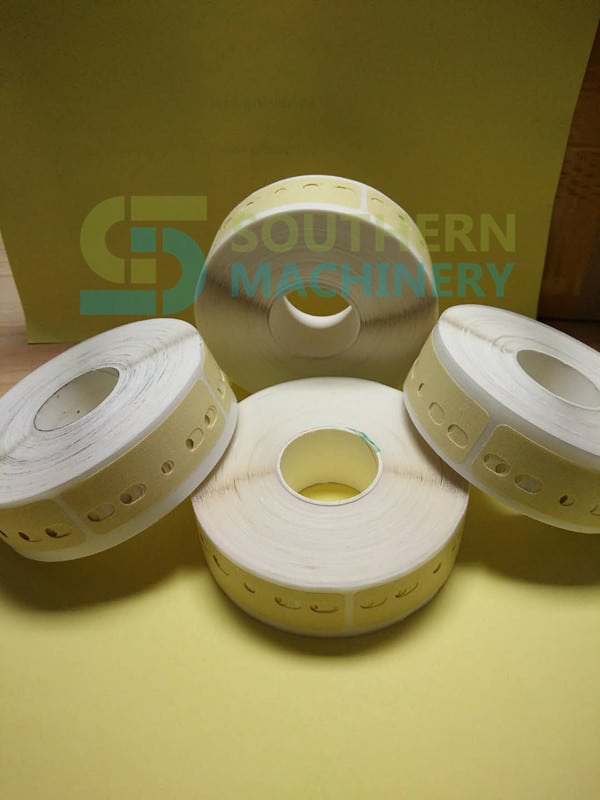
Spleißband für radiale THT-Bauteile (3/5/6 Loch) für die automatische Bestückung
Hochviskoses AI-Spleißband für radial gegurtete THT-Bauteile (Kondensatoren, Induktivitäten, Dioden) auf 12,7-mm- und 15,0-mm-Gurt. Krepp- oder Kraftpapier, gestanzte 3/5/6-Loch-Muster, keine Klebstoffrückstände, +15 % Zuführeffizienz. SCT-Serie von Shenzhen Southern Machinery.
Einige technische Angaben auf dieser Seite (Tabellen, Dokumenttitel) erscheinen wie veröffentlicht auf Englisch.
Angebot anfordern: SMT-Feeder-Kalibriervorrichtung – visuelle Prüfung der Feedergenauigkeit für die smarte EMS-Leiterplattenbestückung
Senden Sie Ihre Platine, Bauteilliste oder Ihr Maschinenmodell, und wir antworten mit einer Konfiguration und einem Angebot. Preise werden projektbezogen kalkuliert.